
Summary
Many consumers encounter estate planning services through seminars, financial advisors, or online programs, but not everyone offering these services is licensed to provide legal advice. In Florida, estate planning—including drafting wills and trusts—generally constitutes the practice of law and must be handled by a licensed attorney. This article explains how consumers can recognize the difference between legitimate legal guidance and product-driven planning, what questions to ask before hiring someone for estate planning services, and why direct interaction with the attorney responsible for the plan is important. Understanding who is providing your advice can help ensure your estate plan truly protects your family and reflects your intentions.
Understanding the Difference Between Legal Advice and Financial Sales
Estate planning is one of the most important legal steps a person can take to protect their family, their assets, and their wishes for the future.
But as estate planning has become more popular, many consumers are encountering a growing number of advertisements for estate planning seminars, online planning services, and “free estate reviews.”
Some of these services are helpful educational resources. Others, however, raise important questions about who is actually providing the legal advice and whether the person offering the service is licensed to do so.
Understanding the difference can help you make an informed decision about where to seek guidance.
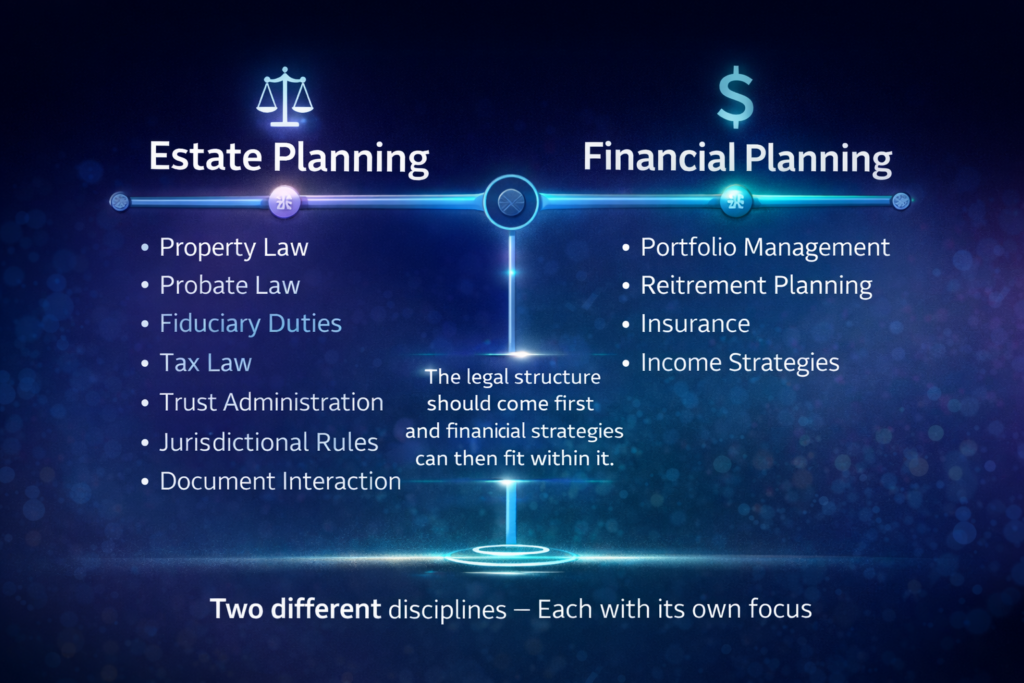
Estate Planning Is the Practice of Law
Drafting estate planning documents is not simply filling out forms.
Creating documents such as:
- wills
- revocable living trusts
- powers of attorney
- healthcare directives
- trust amendments
- complex asset protection structures
generally requires legal judgment and legal advice based on a person’s individual circumstances.
In Florida, providing legal advice and drafting legal documents for another person is considered the practice of law, which is regulated by the Florida Supreme Court.
This means that only a licensed attorney may provide legal advice or prepare legal documents for someone else(with extremely limited form filling exceptions), as part of legal representation.
The Rise of Estate Planning Seminars and Sales Presentations
Consumers today frequently receive invitations to:
- free estate planning workshops
- retirement planning seminars
- wealth preservation events
- “estate reviews” offered by financial professionals
Many of these events are sponsored by financial advisors, insurance professionals, or marketing organizations.
Financial professionals often play an important and valuable role in helping families plan for retirement and manage investments. However, their professional licenses generally do not authorize them to practice law or draft legal documents.
In some situations, the seminar presenter may introduce estate planning concepts and then refer attendees to an attorney who drafts the documents later; sometimes through a large network or remote legal service.
While this structure can be legitimate, consumers should understand who they are actually hiring and who is responsible for their legal advice.
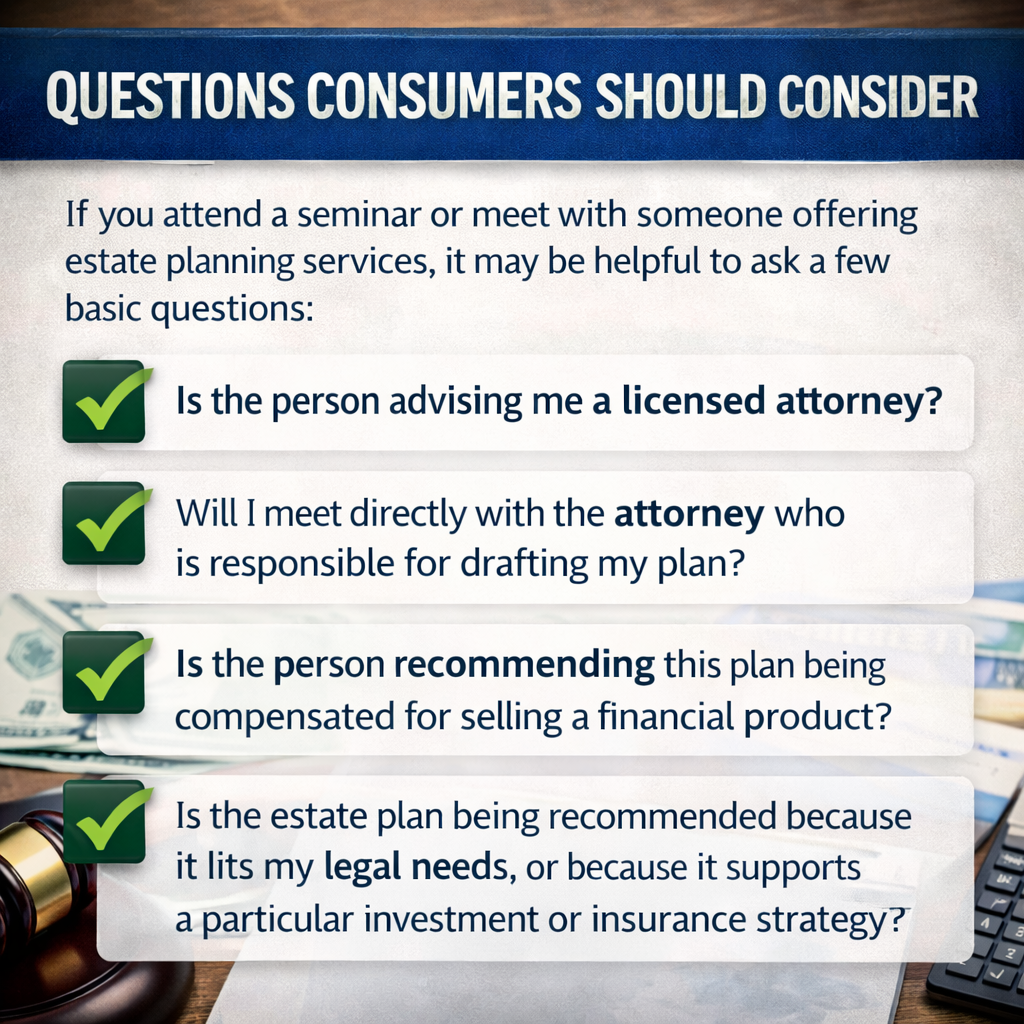
When Sales and Legal Advice Become Blurred
Another situation consumers should be aware of is when an estate planning “review” leads primarily to the recommendation of a financial product, such as:
- annuities
- life insurance
- investment vehicles
- asset transfer strategies tied to commissions
Financial products can be appropriate tools in certain situations, but they should generally be evaluated after the legal structure of the estate plan is carefully designed.
When the planning process begins with a product rather than a legal analysis, it may not fully address the legal issues involved in transferring property, minimizing disputes, or ensuring the documents will function properly.
The Importance of Direct Attorney Advice
One of the most important aspects of estate planning is the attorney-client relationship.
Working directly with an attorney allows you to:
- discuss sensitive family dynamics
- ask detailed legal questions
- understand how laws apply to your specific situation
- ensure documents are customized for your goals
It also ensures that your communications are protected by attorney-client privilege.
Estate planning is not only about documents—it is about legal guidance and long-term planning.

A Collaborative Approach Can Be Valuable
When Legal Planning Is Delegated Without Direct Attorney Involvement
Collaboration among professionals can be valuable, but the legal planning itself should involve direct attorney guidance. Consumers should be cautious if their estate plan begins with completing a questionnaire for a financial professional that is then forwarded to a remote drafting service or attorney the client never meaningfully speaks with. Estate planning requires individualized legal judgment.
In one situation I encountered, a trust plan was drafted by an attorney who never spoke with the clients and included an unnecessary A/B trust structure that restricted the surviving spouse’s control over marital assets. The clients were unaware of the legal consequences until much later. Situations like this illustrate why estate planning should be designed through direct legal advice rather than through a process driven primarily by financial product recommendations or third-party drafting services.

The Bottom Line
Consumers should feel comfortable asking questions about who is providing their estate planning advice.
If you are considering an estate plan, it may be helpful to confirm:
- who is drafting the legal documents
- whether that person is a licensed attorney
- whether the planning process is driven by legal analysis or product sales
Estate planning is ultimately about protecting your family and your wishes. Taking the time to understand who is advising you can help ensure your plan is built on a solid legal foundation.
If you have questions about estate planning in Florida or would like to discuss your situation with an attorney, scheduling a consultation can help you better understand your options.