Summary
Estate planning in Florida is more than simply having a will—it requires a complete and properly structured plan that reflects current laws and life changes. This 2026 Florida Estate Planning Checklist highlights the key components every plan should include, such as a valid will, properly funded trusts, updated powers of attorney, healthcare directives, correct beneficiary designations, and careful handling of Florida homestead property. Regular review is essential to ensure your plan remains legally effective and continues to protect your family, assets, and intentions.
Most people know they should have an estate plan.
Far fewer know whether theirs is actually complete, legally effective, or still working the way they think it is, especially under Florida law.
As we move into 2026, Florida estate planning has become more nuanced, more document-driven, and more unforgiving of outdated plans. Life changes. Laws evolve. And what worked five years ago may no longer protect your family the way you intended.
This checklist is designed to help you spot the gaps, ask the right questions, and make sure your legacy doesn’t unravel when it matters most.
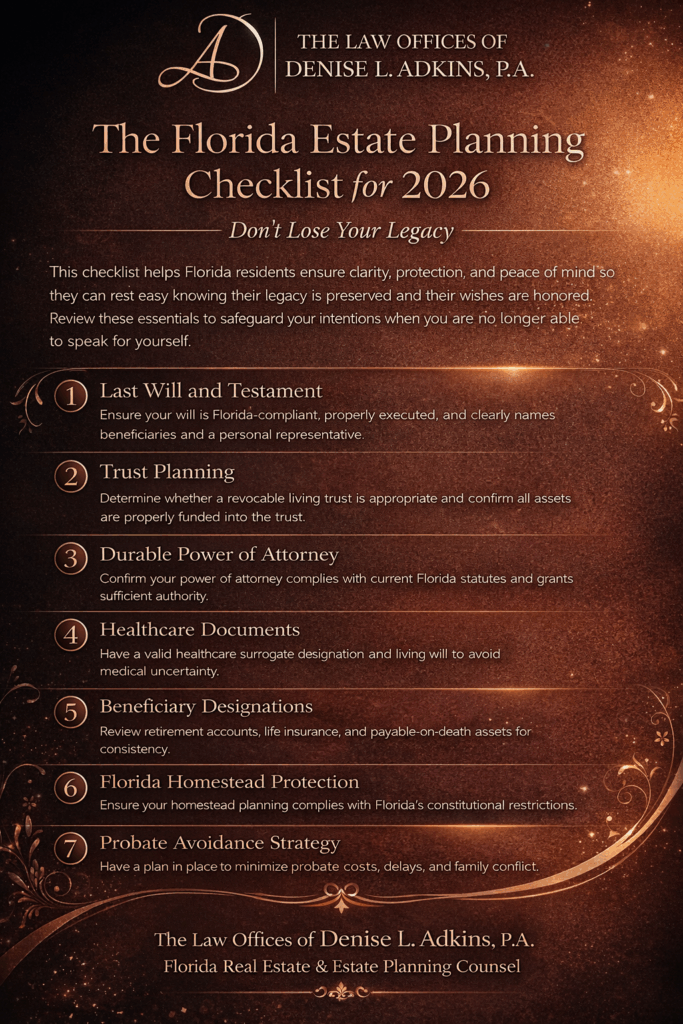
✅ The Florida Estate Planning Checklist for 2026
1. A Florida-Compliant Last Will and Testament
A will is still the foundation of most estate plans, but only if it’s done correctly.
Your Florida will should:
- Name a personal representative (executor) you trust
- Clearly state who inherits what
- Address minor children or dependents
- Be properly executed under Florida law (formalities matter)
⚠️ Common mistake: A will alone does not avoid probate in Florida and outdated wills often cause more litigation than clarity.

2. Trusts (If You Want to Avoid Probate or Control More)
For many Floridians, a revocable living trust is the difference between an orderly transition and a costly, public probate process.
A trust may be appropriate if you:
- Own real estate (especially multiple properties)
- Want to avoid probate delays
- Desire privacy
- Have blended families
- Want ongoing control after death or incapacity
But here’s the key:
👉 A trust that isn’t properly funded is just paper.
Assets must be titled correctly, or the trust won’t do what you think it does.
3. Durable Power of Attorney (Updated for Florida Law)
If you become incapacitated, who can step in immediately?
Florida’s power of attorney laws are strict—and they’ve changed. An outdated or poorly drafted document can be rejected by banks, financial institutions, or even courts.
Your POA should:
- Be durable
- Clearly grant specific powers
- Comply with current Florida statutory requirements
Without this, your loved ones may be forced into a court-supervised guardianship.
4. Healthcare Surrogate & Living Will
These documents answer questions no family wants to guess about:
- Who makes medical decisions if you can’t?
- What treatments do you want, or not want?
- Who has access to your medical information?
Florida law requires specific language and execution for these documents to be honored.
This is about dignity, clarity, and sparing your family impossible decisions.
5. Beneficiary Designations (The Silent Estate Plan Killer)
Many assets pass outside your will or trust entirely.
These can include:
- Life insurance
- Retirement accounts (IRAs, 401(k)s)
- Annuities
- Pay-on-death accounts
If beneficiary designations:
- Name deceased individuals
- Conflict with your estate plan
- Haven’t been updated after marriage, divorce, or death
👉 They can completely override your carefully drafted documents.
This is one of the most overlooked, and most dangerous, areas of estate planning.
6. Florida Homestead Protections (Handled Correctly)
Florida’s homestead laws are powerful, but also complex.
Homestead impacts:
- Who can inherit your primary residence
- Whether you can leave it to certain beneficiaries
- Creditor protections
- Property tax benefits
Improper planning with homestead property can:
- Invalidate portions of your plan
- Trigger unintended heirs
- Create litigation between family members
This is not an area for generic online forms.
7. A Plan to Avoid (or Minimize) Probate
Florida probate can be:
- Time-consuming
- Public
- Expensive
- Emotionally draining for families
Even if probate can’t be fully avoided, a good plan can streamline it, reduce costs, and prevent disputes.
The goal isn’t just legal compliance—it’s peace of mind for the people you love.
When Was the Last Time You Reviewed Your Plan?
If your estate plan hasn’t been reviewed since:
- A move to Florida
- A marriage, divorce, or death
- A major change in assets
- The birth of grandchildren
- Or “sometime before COVID”
…it’s time.
Estate planning isn’t about documents, it’s about making sure your intentions actually happen under Florida law.
Final Thought: Checklists Are the Start…Not the Solution
This checklist is a powerful first step. But estate planning is not a one-size-fits-all process.
The most common problem we see?
People thought they were protected until it was too late to fix.
If you want your legacy preserved, your family protected, and your wishes honored, your plan must be custom, current, and properly implemented.