
Summary
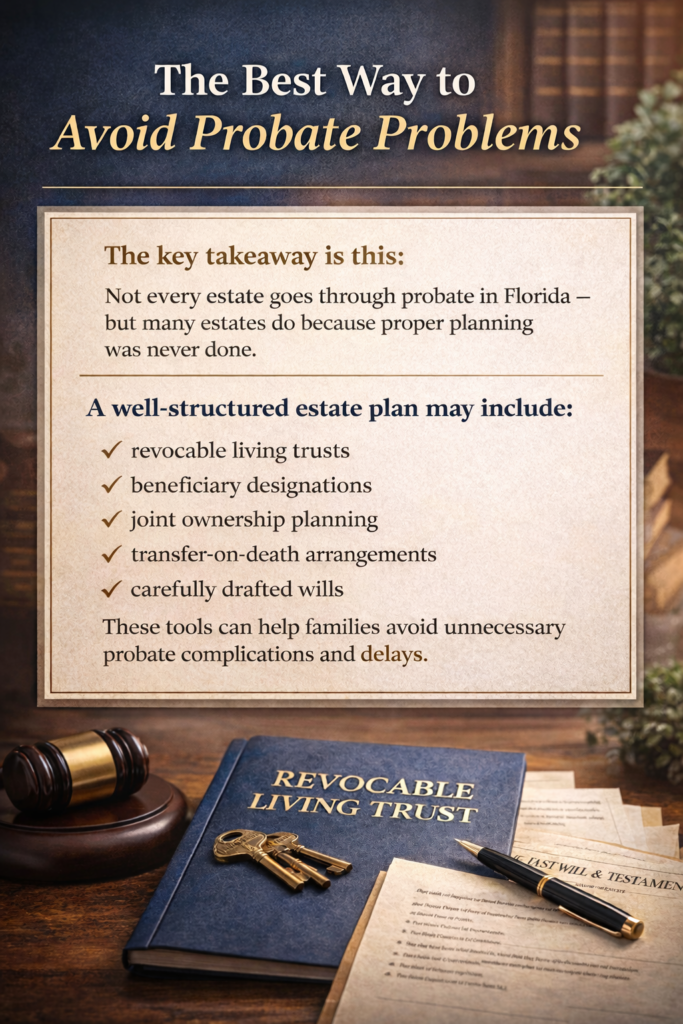
Not every estate in Florida must go through probate. Many assets—such as trust property, jointly owned property, and accounts with beneficiary designations—can pass directly to heirs without court involvement. Understanding which assets require probate and which do not can help families avoid unnecessary delays, expenses, and stress during the estate administration process.
When a loved one passes away, families often worry about one thing immediately:
Will we have to go through probate?
One of the most common questions people ask is:
“Does every estate go through probate in Florida?”
The short answer is no.
Many assets can pass to heirs without probate, depending on how they are titled or structured. However, when assets are owned solely in a person’s name with no beneficiary designation, probate is usually required.
Understanding the difference can save families time, legal expenses, and unnecessary stress.
What Is Probate?
Probate is the court-supervised process of administering a deceased person’s estate.
During probate, the court typically oversees:
- Validating the will (if one exists)
- Appointing a personal representative
- Identifying assets and debts
- Paying creditors
- Distributing assets to beneficiaries
Florida probate can take several months to more than a year, depending on the complexity of the estate.
But importantly, not every asset becomes part of probate.
Assets That Usually Do NOT Go Through Probate
Several types of assets transfer automatically when someone dies.
Proper estate planning often focuses on structuring assets to avoid probate whenever possible.
Trust Assets
Assets placed into a revocable living trust generally avoid probate.
When the person who created the trust dies, the successor trustee distributes the assets directly to the beneficiaries according to the trust terms.
This is one reason many Florida residents choose to include trusts in their estate plans.

Jointly Owned Property
Property owned with rights of survivorship passes directly to the surviving owner.
Common examples include:
- real estate owned as joint tenants with right of survivorship
- property owned as tenants by the entirety between spouses
- joint bank accounts
When one owner dies, the property automatically transfers to the survivor without probate.
Important:
Just because two people own property together does not automatically mean the property passes to the surviving owner. The deed must specifically include rights of survivorship.
Payable-on-Death (POD) and Transfer-on-Death (TOD) Accounts
Many financial accounts allow you to designate beneficiaries.
Examples include:
- bank accounts with payable-on-death (POD) designations
- brokerage accounts with transfer-on-death (TOD) beneficiaries
- retirement accounts such as IRAs and 401(k)s
- life insurance policies
When the account holder dies, the funds typically transfer directly to the named beneficiary, bypassing probate.
When Probate Is Usually Required
Probate is usually necessary when someone dies owning assets solely in their name with no beneficiary designation.
Examples may include:
- a house titled only in the decedent’s name
- a bank account with no beneficiary
- personal property without transfer instructions
In those situations, the probate court must supervise the transfer of ownership.
Florida’s Simplified Probate Option: Summary Administration
Florida law allows certain smaller estates to use summary administration, a simplified probate process.
Summary administration may be available when:
- the value of the estate subject to probate is $75,000 or less, or
- the person has been deceased for more than two years
This process is usually faster and less expensive than formal probate administration.
However, it still involves court filings and legal procedures, so guidance from a probate attorney is often helpful
When Should You Speak With an Estate Planning Attorney?
If you own property, have family members who will inherit assets, or want to simplify things for your loved ones, it is wise to plan ahead.
Proper estate planning can help:
- reduce probate costs
- streamline asset transfers
- protect beneficiaries
- prevent family disputes
If you want to avoid unnecessary probate complications and ensure your assets pass smoothly to your loved ones, proper planning is essential.
An experienced Florida estate planning attorney can review your assets, explain your options, and help structure a plan that protects your family.