Summary
A homeowner’s purchase and later sale of a property revealed a serious title defect that had been missed not once, but twice by different title companies. An undiscovered HELOC mortgage from the original seller resurfaced years later when a subsequent buyer faced foreclosure, forcing the buyer’s title insurer to pay the debt and pursue claims against prior owners, including the seller who had relied on the earlier title work. When the homeowner attempted to rely on her own title insurance for protection, the original title company had already collapsed and key documents were missing, leaving her to defend the claim herself. The situation highlights the importance of retaining closing documents, understanding the limits of title companies, and seeking legal guidance to protect one’s interests in real estate transactions.
Gather close, because this is a true real estate tale with a chilling moral: sometimes the scariest thing lurking in your home isn’t creaky pipes or flickering lights—it’s the paperwork you don’t have.
Act I: A Hidden Mortgage
On or around December 2018, our client bought what she believed was her dream home. Like any responsible buyer, she went through a title company to make sure the property was free and clear of any liens or hidden obligations. Everything appeared perfect—or so it seemed.
That title company has since collapsed, and its owner was later convicted of wire fraud for misappropriating client funds. But at the time, they gave our client the green light to close, assuring her that the title was clear.
Except it wasn’t. The seller still had an active home equity line of credit (HELOC) mortgage against the property that the title company failed to uncover. Because it wasn’t discovered, it wasn’t paid off at closing—leaving a cloud on title that quietly followed the property long after the sale.
Act II: Déjà Vu in Disguise
Two years later, in 2020, our client sold the house. The buyer used a different title company—one that reviewed the old file and ran its own search. Surely, this one would catch any ghosts of mortgages past.
But they didn’t. The same HELOC mortgage—the seller’s old lien that should have been paid off in 2018—was missed again. The second title company cleared the sale, issued a new title policy, and everyone moved on… until a year later, when the new owner was served with a foreclosure notice for a $65,000 loan they never knew existed.
The buyer’s title insurer had to step in and pay off the debt, then turned around and sued the prior owners, including our client, to recover its loss.
So despite doing everything right—buying, selling, and relying on professionals—our client was suddenly dragged back into a transaction she thought was long behind her.
The title insurance company that issued the buyer’s policy had to pay it off. And now, they’re suing down the chain of ownership—including our client.
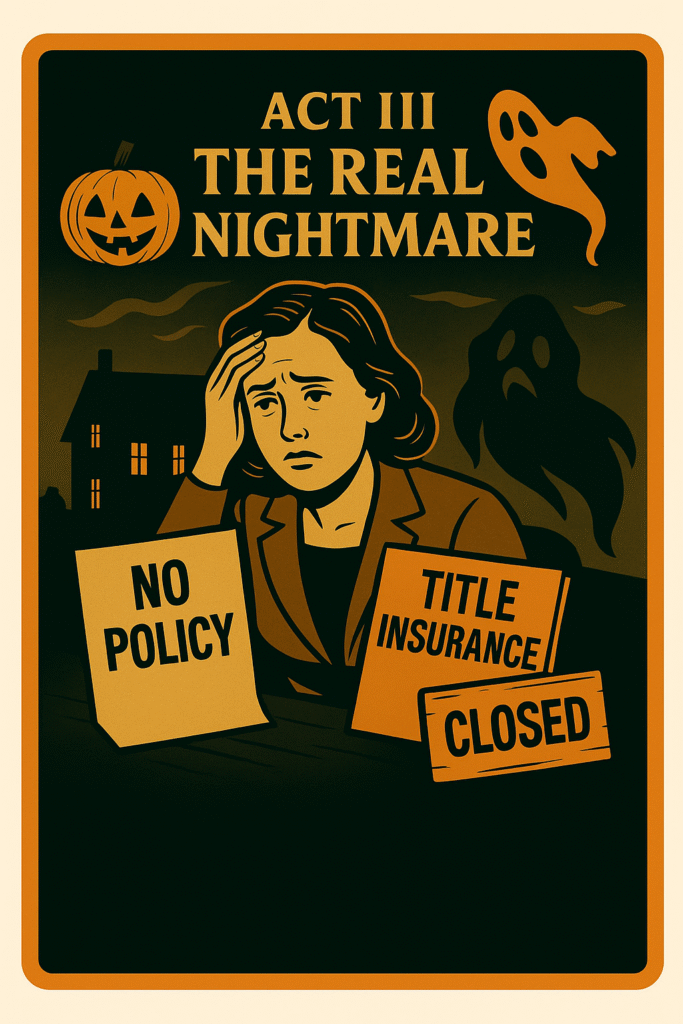
Act III: The Real Nightmare
Naturally, our client turned to her own title insurance for protection. After all, that’s what it’s for. But here’s the horror twist:
- The original title company is gone.
- The agent who handled the file is still in business, but the company is not.
- The insurer claims it isn’t their job to keep a copy of her policy.
- Our client doesn’t have her copy.
Without the paperwork, she’s been left to defend herself—at significant personal cost—against a debt she never owed in the first place.
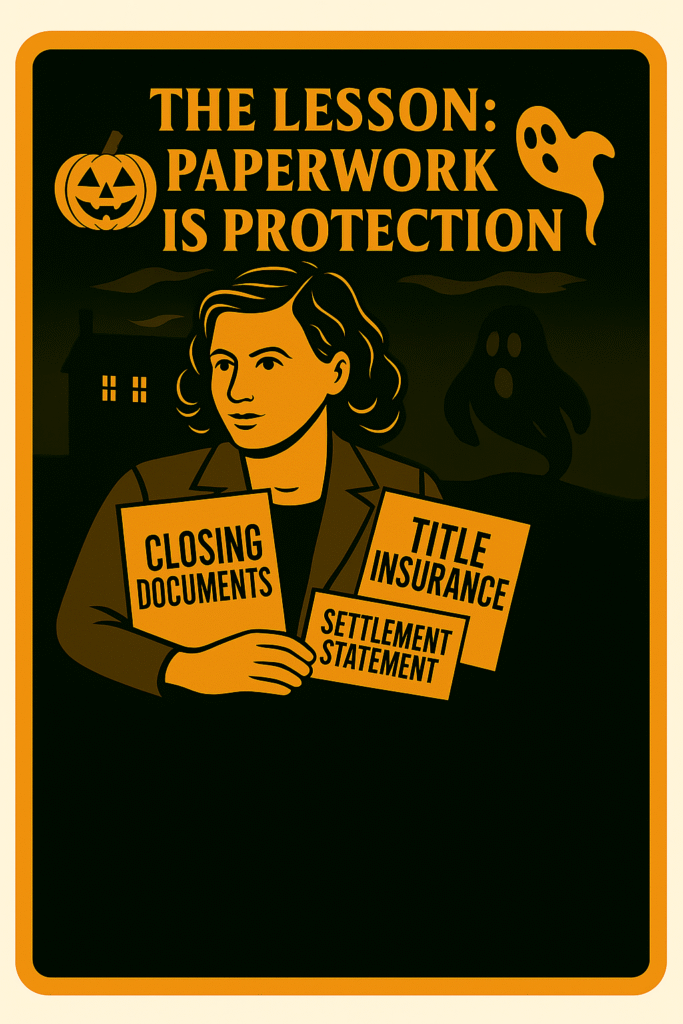
The Lesson: Paperwork is Protection
The moral of this haunted mortgage story is simple, but vital:
- Always keep copies of your title insurance policy, closing documents, and settlement statements. Never assume someone else will keep them safe for you.
- Work with professionals who stand the test of time. Not every title company has the financial stability—or integrity—to be there when you need them.
- Remember that mistakes happen, even with insurance. When they do, the only proof you have is the paperwork in your hands.
- Consult with a real estate attorney. A lawyer can ensure your interests are truly protected, not just rubber-stamped.
Closing the Coffin
Our client’s nightmare is ongoing—but your story doesn’t have to be. Don’t let the ghosts of old mortgages creep up on you. Protect yourself, keep your documents close, and when in doubt, get legal backup.
Because in real estate, the scariest words aren’t “Boo!”—they’re “Where’s your policy?”