
Summary
HOAs in Florida have legal obligations to maintain common areas such as drainage easements, slopes, and stormwater systems when those responsibilities are outlined in their governing documents. When an association fails to fulfill these duties, homeowners may face serious issues like erosion, flooding, or structural risks to their property. Florida law allows homeowners to pursue legal remedies—including claims for negligent maintenance or requests for declaratory judgment—to clarify and enforce an HOA’s responsibilities. Understanding HOA covenants, documenting damage, and seeking legal guidance can be essential steps in protecting your property when an association neglects its maintenance obligations.
Introduction
If you’ve ever dealt with a homeowners’ association (HOA), you know it can feel a little like being in a sitcom—with rules about mailbox colors, garbage cans, and maybe even whether your gnome collection is HOA-approved. But when the issues get serious—like drainage, slope stability, or erosion threatening your home—HOA responsibilities are no laughing matter.
Recently, I filed a lawsuit against an HOA that failed to maintain a drainage easement and slope next to a client’s property. The result? Erosion, structural risks, and a battle over who is responsible for fixing the problem. It’s a story with lessons every Florida homeowner should know.
Florida HOA Maintenance Obligations: Not Optional Under the Law
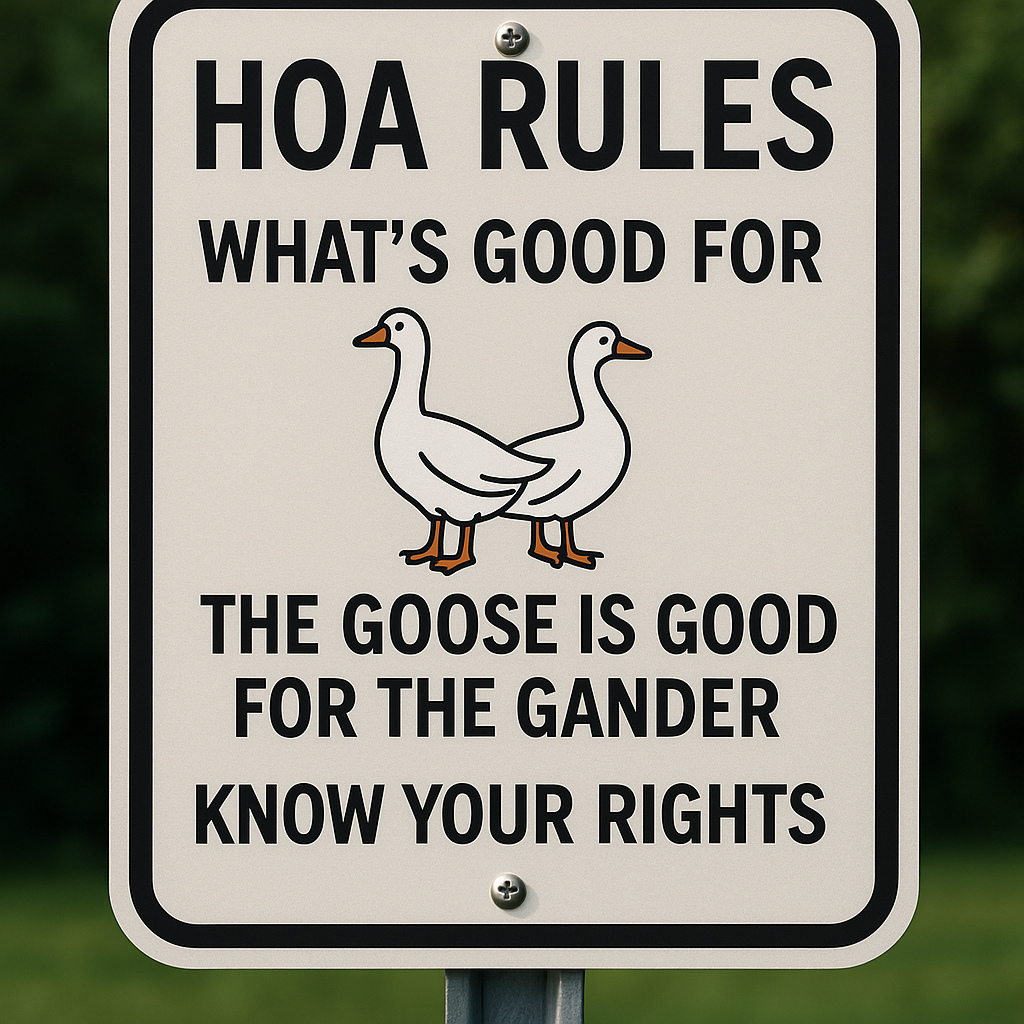
HOAs often promise to maintain common areas, but whether they deliver is another story. Florida law makes it clear that associations must carry out those responsibilities.
- In Cole v. Plantation Palms HOA, the court reinforced that HOAs cannot simply ignore their duty to maintain common areas when property owners are depending on them.
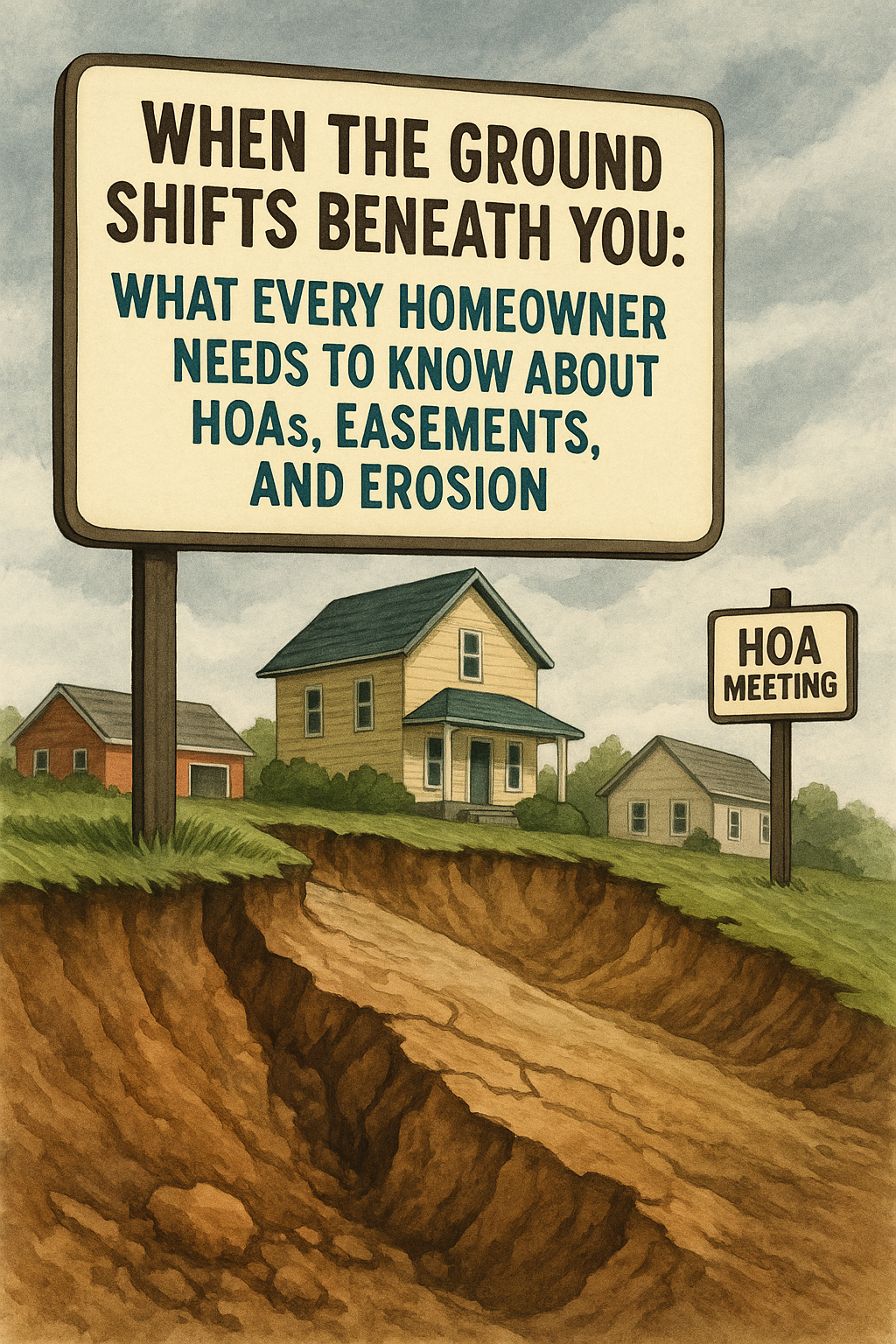
Think of it this way: When the Ground Shifts Beneath You isn’t just a catchy title—it’s the reality many Florida homeowners face when easements and common areas aren’t maintained. If your CC&Rs say the HOA is responsible for maintaining a drainage easement, slope, or stormwater system, they can’t turn around and ask you, the individual homeowner, to foot the bill. That duty runs with the association, and Florida courts have made clear that “forgetting” or shifting the burden isn’t a valid defense. If you find yourself in this situation, it’s important to seek independent legal advice right away (our contact information is at the bottom of this post, or you can click the Request a Consultation button).
Translation: If your HOA is supposed to maintain the slope, stormwater system, or drainage easement near your home, “Oops, we forgot” isn’t a valid legal defense.
Suing a Florida HOA for Negligent Maintenance
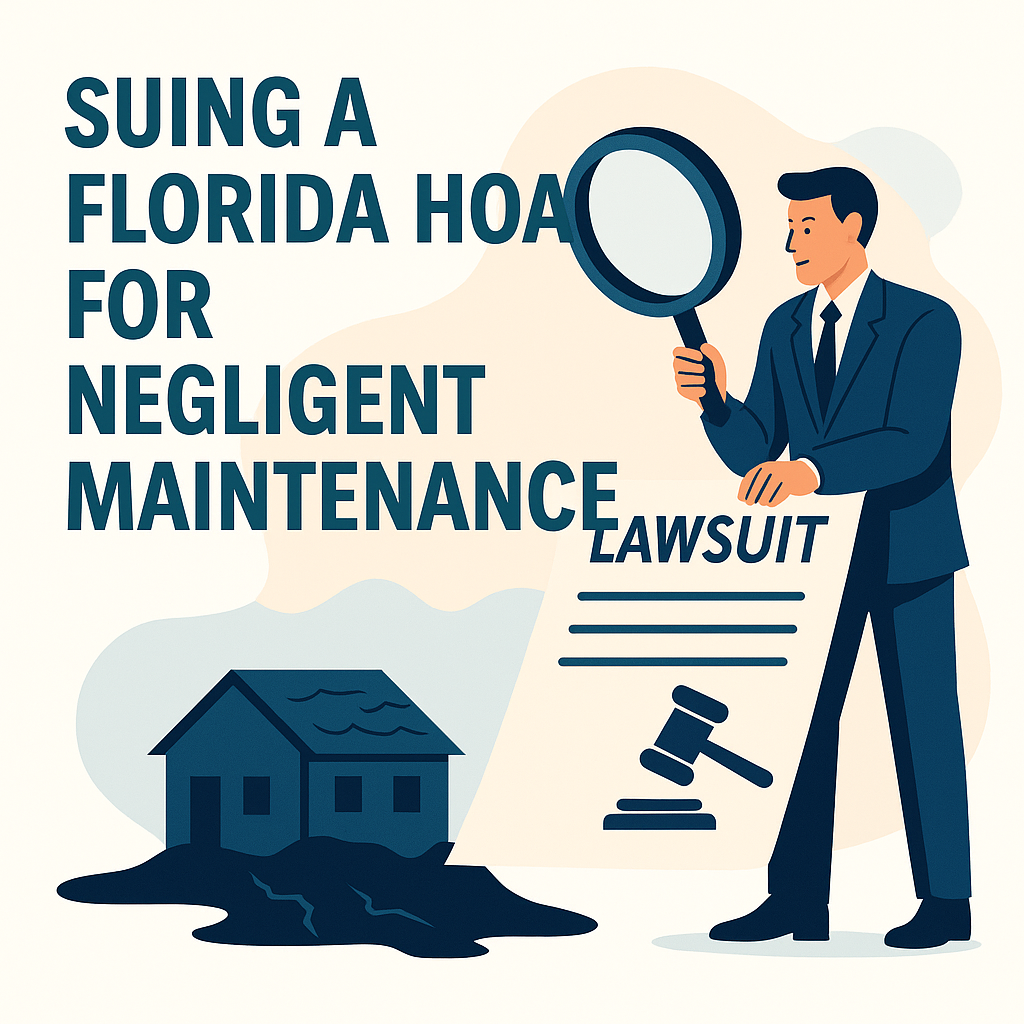
The law doesn’t just hold HOAs accountable under their covenants—it also allows homeowners to sue for negligent maintenance.
- The Restatement (Second) of Torts § 365 tells us that when someone controls land with structures (like a drainage system), they must prevent it from becoming dangerous through disrepair.
- Florida’s HOA statute, § 720.303(1), requires associations to maintain common areas for the benefit of all owners.
When HOAs drop the ball, homeowners aren’t just left holding the sandbags—there are legal remedies.

Using Declaratory Judgment to Clarify HOA Responsibilities in Florida
Sometimes the problem is not whether the HOA failed, but who is supposed to do what. In these cases, Florida’s Declaratory Judgment Act (Fla. Stat. §§ 86.011 and 86.021) lets homeowners ask the court to declare the parties’ rights and responsibilities.
- In Murphy v. Bay Colony Prop. Owners Ass’n, the court upheld the use of declaratory relief to clarify HOA duties.
- In Bendo v. Silver Woods Cmty. Ass’n, the Fifth DCA reinforced that principle, reversing another trial court that had dismissed a homeowner’s declaratory judgment claim too early. The court reminded us that the test isn’t whether you’ll win, but whether you have a real, present need for a declaration.
Think of it like calling the referee before the fight gets bloody—you can ask the court to sort out the rules before more damage happens.
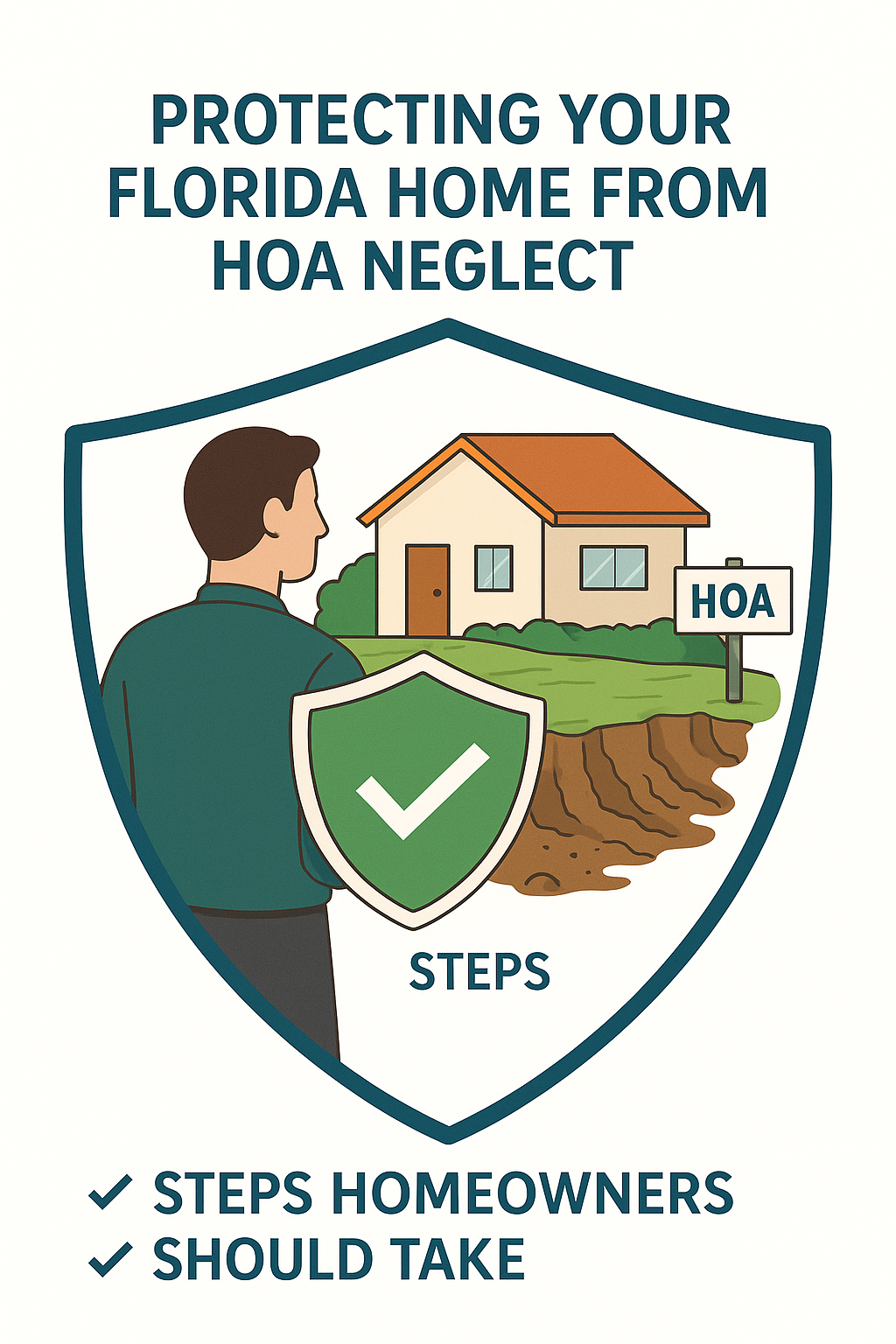
Protecting Your Florida Home from HOA Neglect: Steps Homeowners Should Take
Slopes erode, easements flood, and houses can suffer real damage when common areas aren’t maintained. Waiting for “good neighborly cooperation” sometimes works, but more often, homeowners need to:
✅ Document the damage.
✅ Review their HOA’s covenants and bylaws.
✅ Consult with an attorney who knows both the statutes and the case law (yes, shameless plug).
Because here’s the truth: you bought a home, not a legal headache.
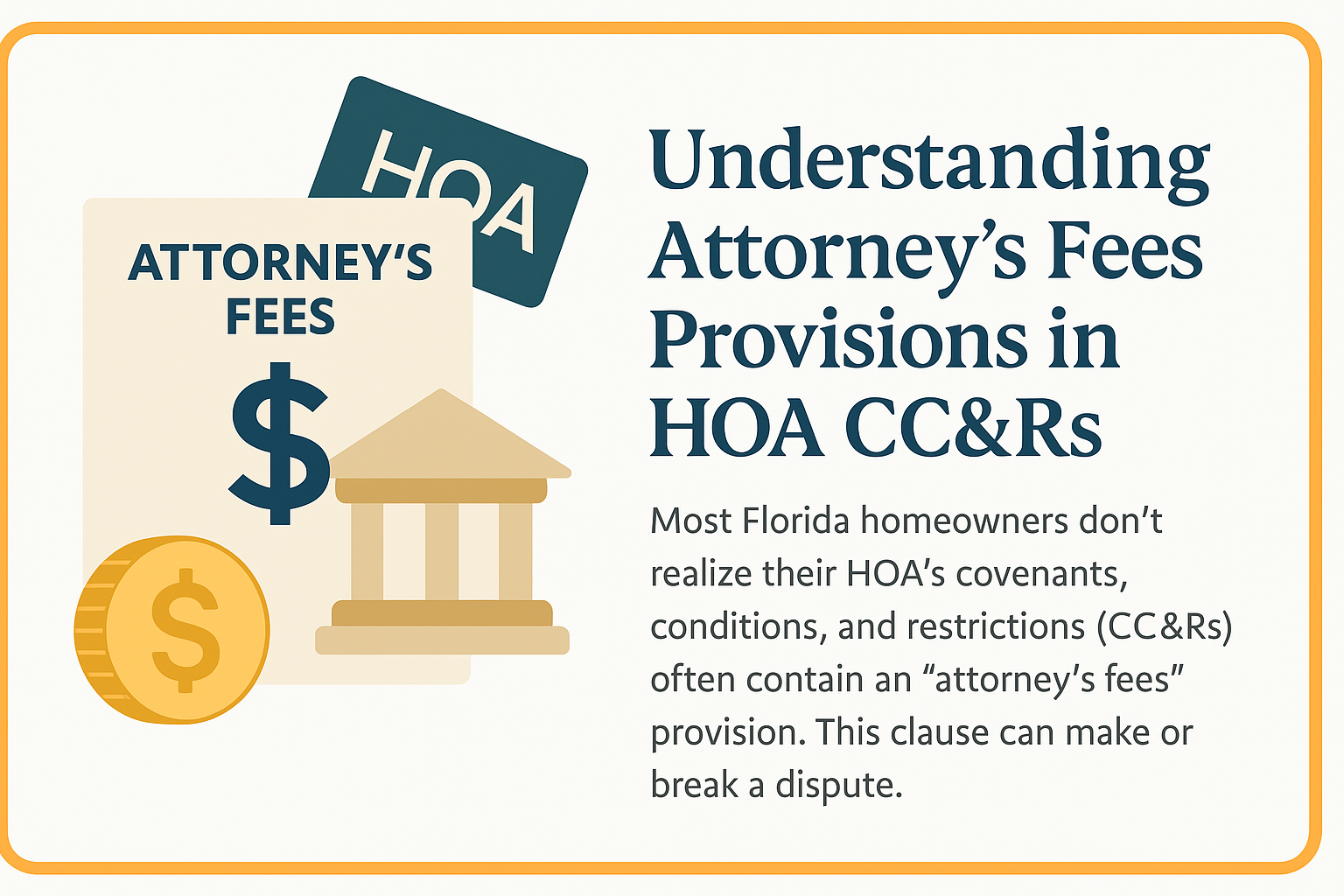
Understanding Attorney’s Fees Provisions in HOA CC&Rs
Most Florida homeowners don’t realize their HOA’s covenants, conditions, and restrictions (CC&Rs) often contain an “attorney’s fees” provision. This clause can make or break a dispute.
Here’s why it matters:
- If the HOA wins: You may be responsible for paying the association’s attorney’s fees, in addition to your own.
- If you win: The HOA may be required to reimburse you for the legal costs of enforcing your rights.
Florida courts regularly enforce these provisions, meaning homeowners should weigh both the risks and rewards before taking legal action. A strong claim supported by clear evidence not only protects your property—it may also shift the cost of litigation back to the association.

Florida HOA Disputes: FREE Consultations
When it comes to HOAs, the fine print matters—and so does the mudslide creeping toward your foundation. Florida law provides homeowners with tools to hold associations accountable, whether through breach of contract, negligent maintenance, or declaratory relief.
At my firm, we combine heart and focused advocacy to make sure homeowners aren’t left sinking—literally or legally.
Click the link below or call the Law Offices of Denise L. Adkins, P.A. at (407) 337-3377 if you need help navigating HOA disputes. We’ll bring the case law, the strategy, and maybe a little laughter to steady the ground beneath your feet.
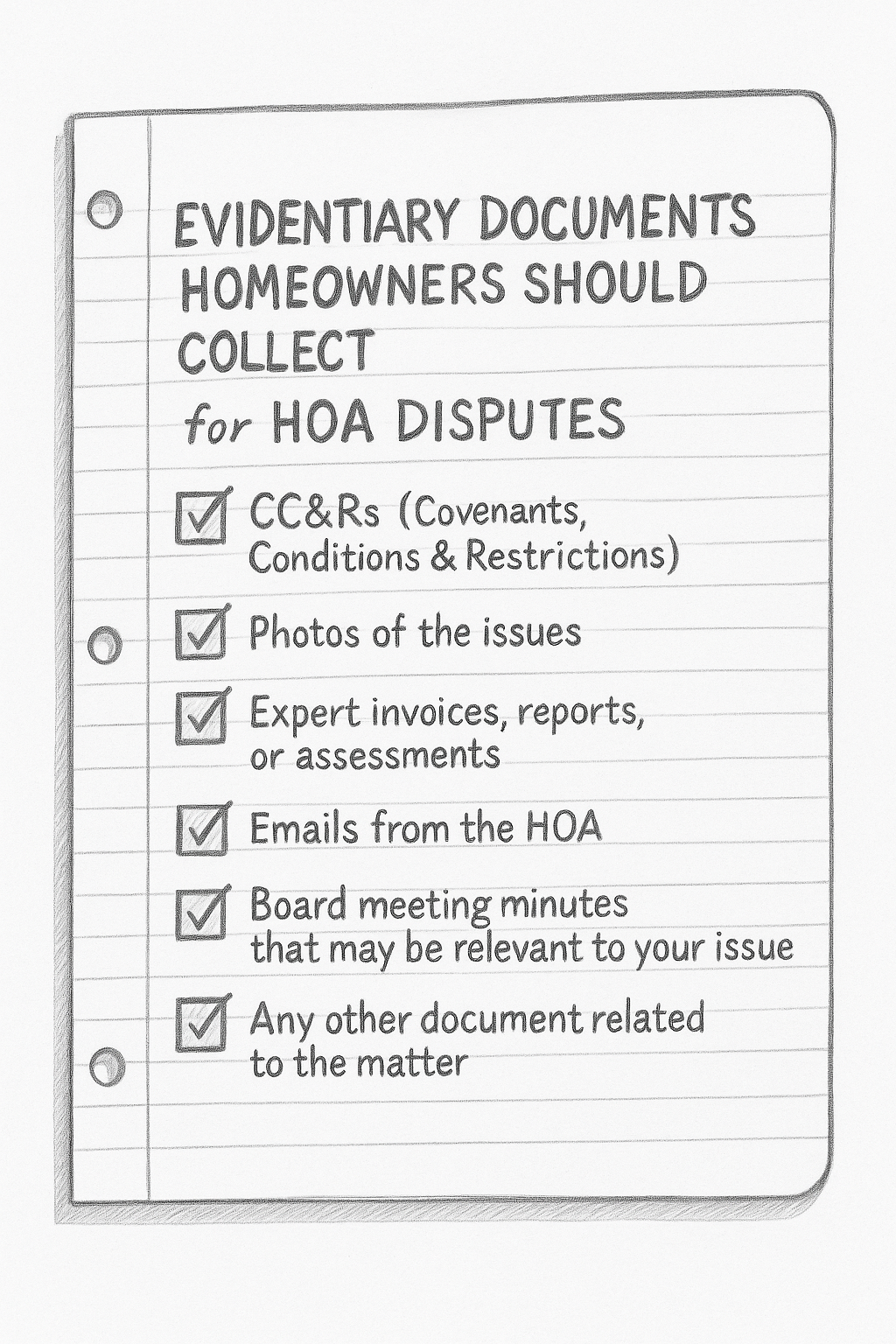
Evidentiary Documents Homeowners Should Collect for HOA Disputes
📑 CC&Rs (Covenants, Conditions & Restrictions)
Your HOA is required to provide these documents. If unavailable, check county public records.
📸 Photographs & Videos of the Issues
Document erosion, flooding, slope failure, or other visible damage.
🧾 Expert Invoices, Reports, or Assessments
Engineering reports, contractor estimates, or inspection notes.
📧 Emails, Letters, or Notices from the HOA
Keep copies of all communication with your association.
📝 HOA Board Meeting Minutes
Look for discussions about maintenance, budgets, or repairs related to your issue.
📂 Other Relevant Documents
Anything that shows the problem, the HOA’s knowledge of it, or their failure to act.
👉 Tip: Start collecting these documents now. During your consultation, we’ll review what you have and determine what else can be obtained through records requests or legal discovery.