
Summary
A recent federal court decision warns that entering confidential legal information into public AI platforms may risk waiving attorney-client privilege. In United States v. Heppner (2026), a court ruled that information shared with a public AI tool was not protected because it was disclosed to a third party. As AI tools become more common, courts may treat AI prompts and chat histories as discoverable evidence in litigation. Before using AI to analyze a legal issue, it is important to understand the potential risks to confidentiality.
Artificial intelligence is everywhere right now.
People are using tools like ChatGPT, Claude, Copilot, and other AI platforms to ask questions about everything from business strategy to legal disputes.
But a recent federal court case delivered an important warning:
Entering confidential legal information into a public AI platform may create a risk of waiving attorney-client privilege, depending on the circumstances.
And even if privilege is not involved, your AI search history may still become evidence in a lawsuit.
This is something every business owner, homeowner, investor, and professional should understand.
A New Court Decision Raises Serious AI Legal Risks
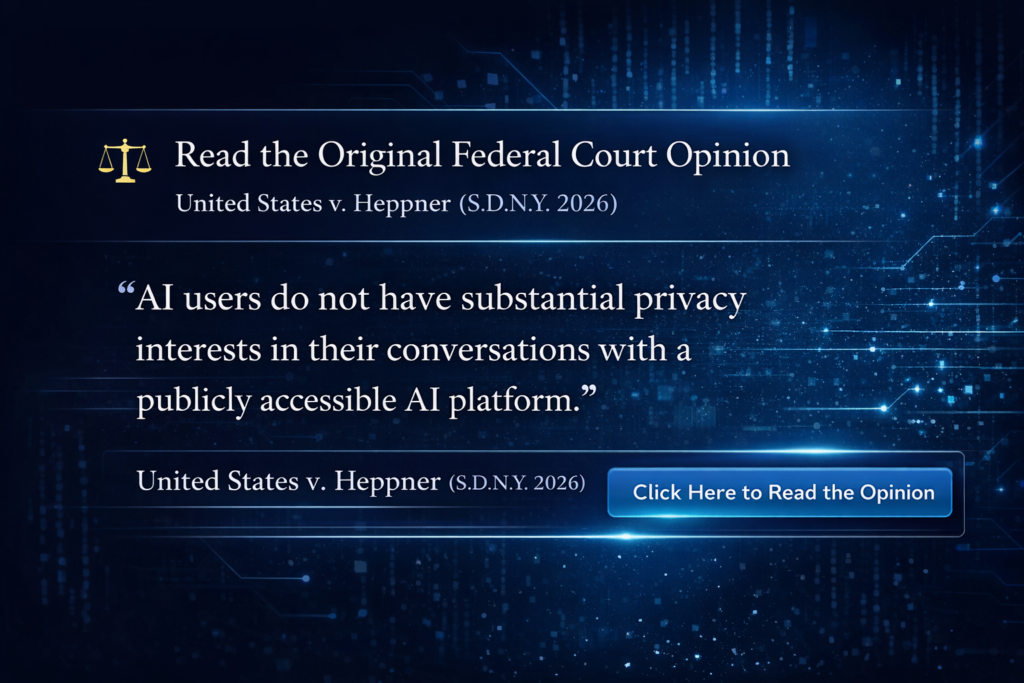
AI users do not have substantial privacy interests in their conversations with a publicly accessible AI platform.
In United States v. Heppner (S.D.N.Y. Feb. 10, 2026), a defendant in a federal criminal case used a public AI platform to conduct his own legal research.
The defendant entered confidential information related to his case into the AI system and generated documents based on those prompts.
When investigators later seized his computer, they discovered the AI-generated materials.
The defendant argued that the documents should be protected by attorney-client privilege.
The court rejected that argument.
Why?
Because he had voluntarily shared confidential legal information with a third party — the public AI platform.
The court ruled that the defendant did not have a reasonable expectation of confidentiality, meaning the attorney-client privilege did not apply.
Why Attorney-Client Privilege Can Be Lost When Using AI
Attorney-client privilege protects confidential communications between a lawyer and their client.
But that protection only exists if the communication remains confidential.
Once confidential information is shared with a third party, privilege may be waived.
Public AI platforms often:
- Store user prompts
- Retain conversation history
- Process information on external servers
- Use prompts to improve future models
Because of this, courts may treat these systems as third parties, similar to sharing information with someone outside the legal relationship.
In the Heppner case, that was enough for the court to find that privilege had been lost.
There is another issue many people overlook.
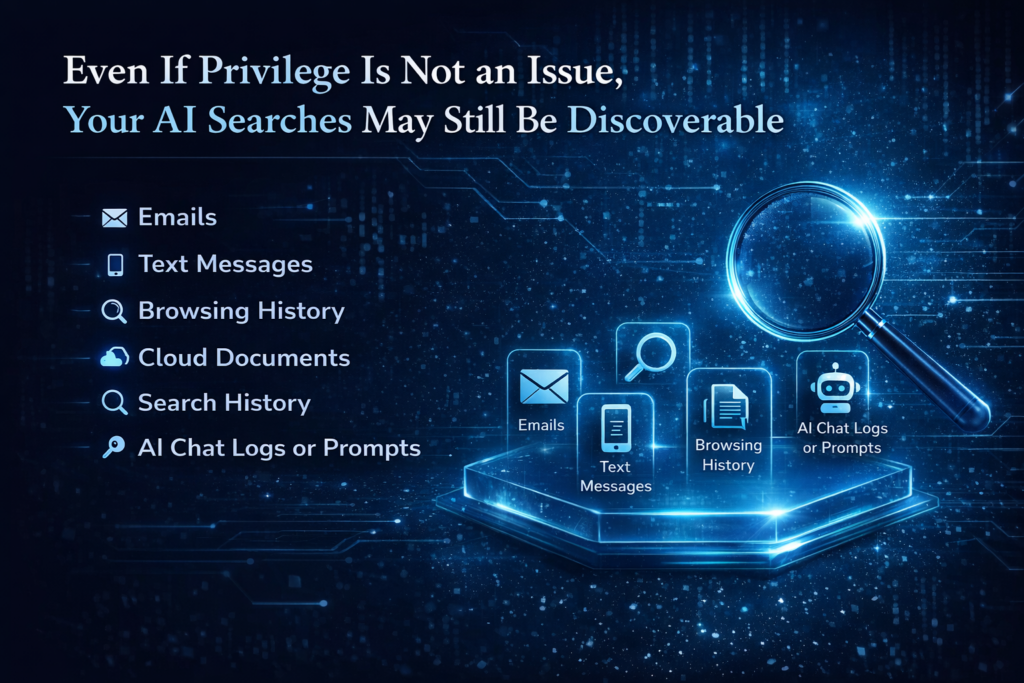
Even when attorney-client privilege is not involved, your AI prompts and search history may still be discoverable evidence in a lawsuit.
In litigation, parties must often produce electronically stored information (ESI) during discovery.
This can include:
- emails
- text messages
- browsing history
- cloud documents
- search history
- AI chat logs or prompts
If those records are relevant to a case, a court may order them to be produced.
Remember the Casey Anthony Google Search Evidence
A well-known example of digital search history becoming evidence occurred in the Casey Anthony case.
Investigators reviewed the computer’s internet history and found searches related to chloroform, which became a major issue in the investigation and trial.
The key takeaway is simple:
Digital searches can become evidence.
Today, the same concept applies to AI prompt history.
If someone enters prompts such as:
- “How do I hide assets from creditors?”
- “Ways to terminate a tenant without eviction”
- “How to get around HOA rules”
- “How to break a contract without liability”
those prompts may be stored by the AI platform or on the user’s device.
In a lawsuit, opposing counsel may request those records during discovery.
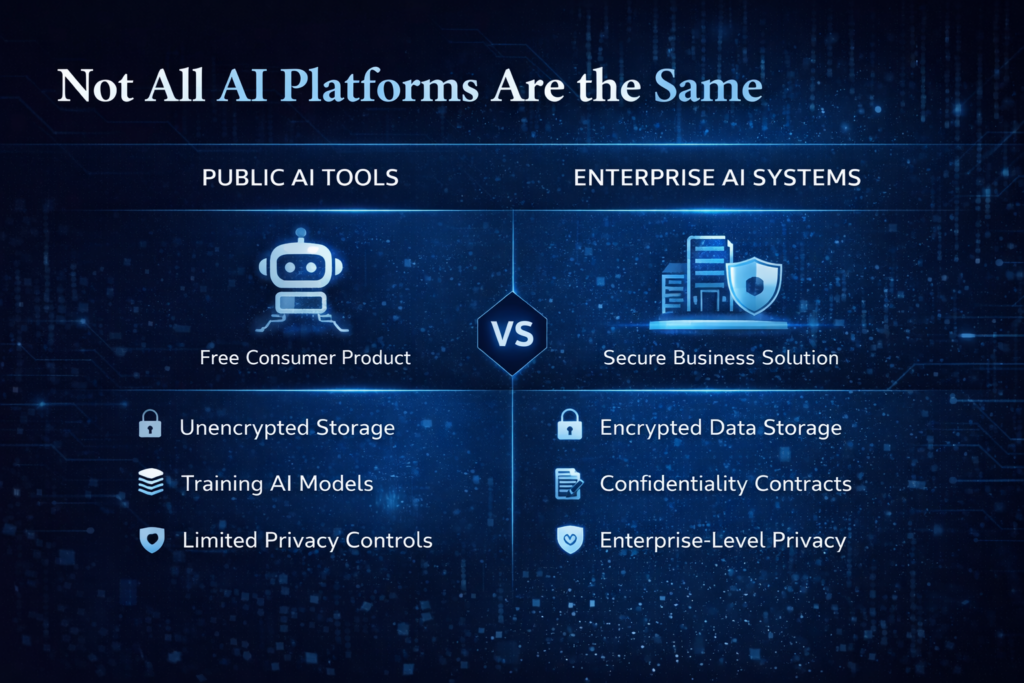
Not All AI Platforms Are the Same
Another important issue raised by the Heppner decision is the difference between public AI tools and enterprise AI systems.
Some enterprise platforms offer stronger security protections, including:
- encrypted data storage
- contractual confidentiality protections
- restrictions on using prompts to train models
- enterprise-level privacy controls
However, the court in Heppner specifically noted that the defendant used a free consumer AI product, not a paid enterprise system.
Whether courts will treat enterprise AI differently remains an evolving issue.
The Biggest Risk: Clients Using AI Without Their Lawyer
One of the most important facts in the Heppner case was this:
The client used AI on his own.
His attorneys did not instruct him to do so.
The court suggested that materials prepared at the direction of counsel might potentially receive different treatment under the work-product doctrine.
But the safest approach is simple:
If you are involved in a legal dispute, investigation, or litigation, do not use AI tools to analyze your case without speaking with your lawyer first.
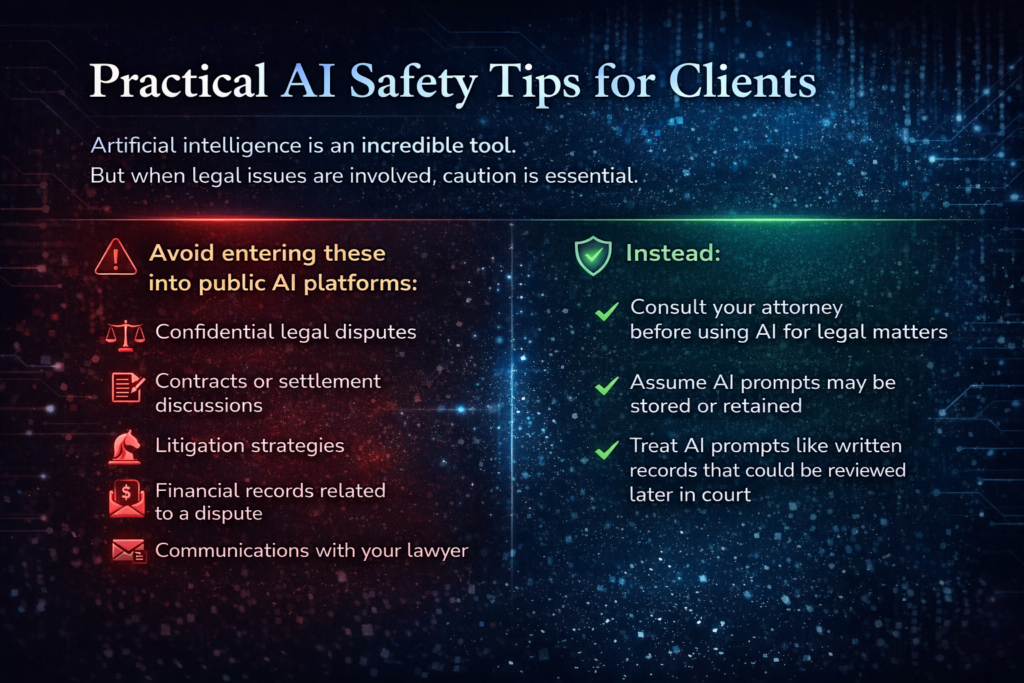
The Future of AI and Legal Evidence
Artificial intelligence is rapidly transforming how people research problems and make decisions.
But courts are quickly adapting as well.
Search history, cloud storage, and digital communications have already become common evidence in litigation.
AI prompts are simply the next frontier.
As AI tools become more common, courts will increasingly treat AI conversations as discoverable digital records.

The Bottom Line
Artificial intelligence is powerful — but it is not always private.
Before typing sensitive information into any AI system, ask yourself one question:
Would I be comfortable explaining this prompt in court?
If the answer is no, it may be best to speak with your attorney first.
Attorney-client privilege is one of the most important protections in the legal system.
But once it is waived, it can be very difficult to restore.
If You Have Questions About AI, Privacy, or Legal Risks
Artificial intelligence is changing the legal landscape quickly.
If you have questions about AI use, confidentiality, litigation risks, or protecting sensitive information, consulting with legal counsel early can prevent serious problems later.

Disclaimer:
This article is provided for informational purposes only and does not constitute legal advice. Reading this article does not create an attorney-client relationship. Legal issues depend on specific facts, and individuals should consult qualified counsel regarding their particular situation.