When a loved one passes away, the last thing you want is to get lost in legal paperwork. Unfortunately, if the person owned property or significant assets in Florida, their estate may need to go through probate—a court process that makes sure debts are paid and property is legally transferred to heirs or beneficiaries.
The good news? Florida’s probate system has clear rules, timelines, and even some protections for families. In this guide, we’ll break it down in plain English—while pointing to the key Florida statutes that govern the process.
What Is Probate in Florida?
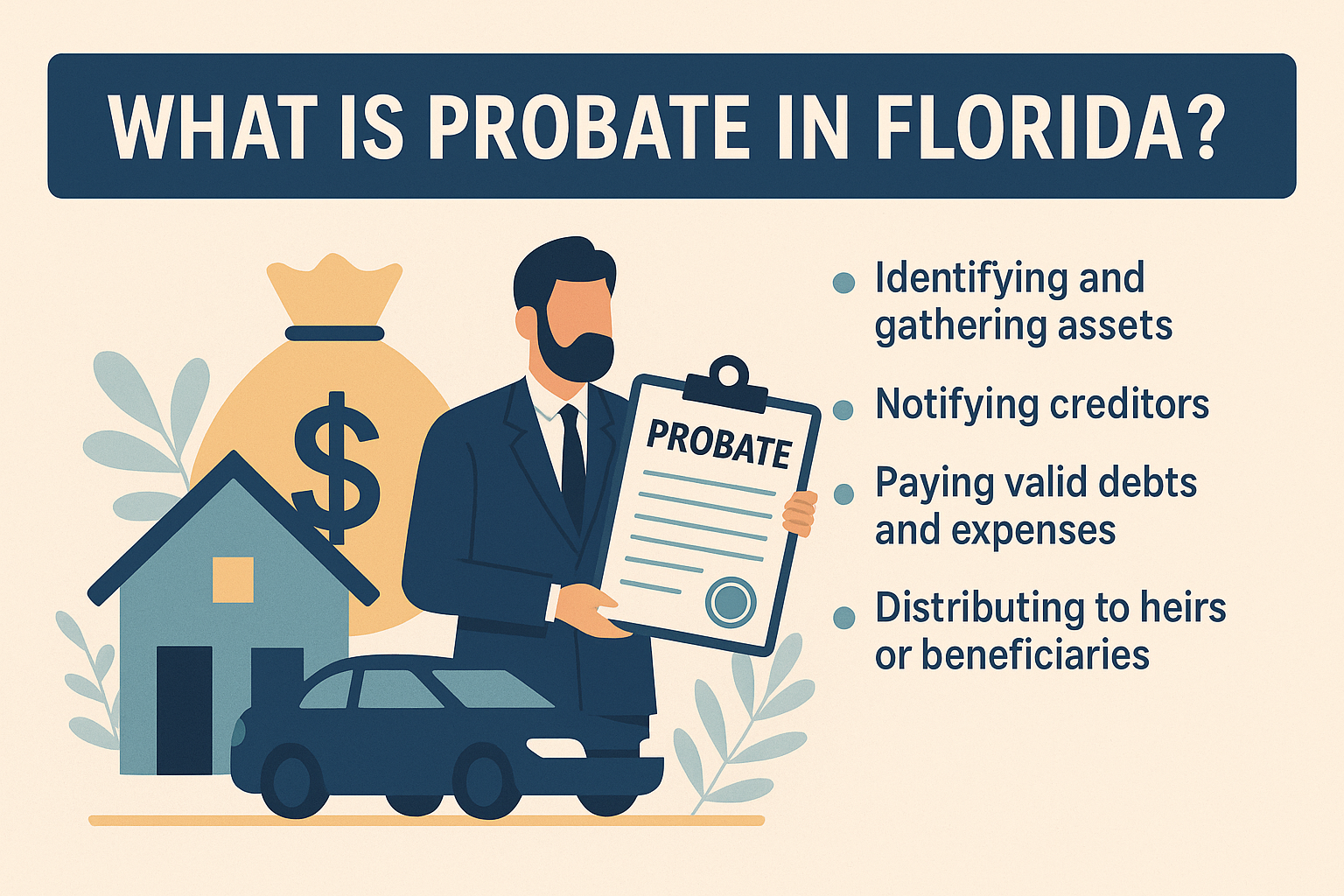
Probate is simply the legal process of “wrapping up” someone’s financial life after they pass. It can involve:
- Identifying and gathering assets
- Notifying creditors
- Paying valid debts and expenses
- Distributing what’s left to heirs or beneficiaries
Florida probate law is found in Chapters 731–735 of the Florida Statutes, known as the Florida Probate Code.
The Three Types of Probate in Florida
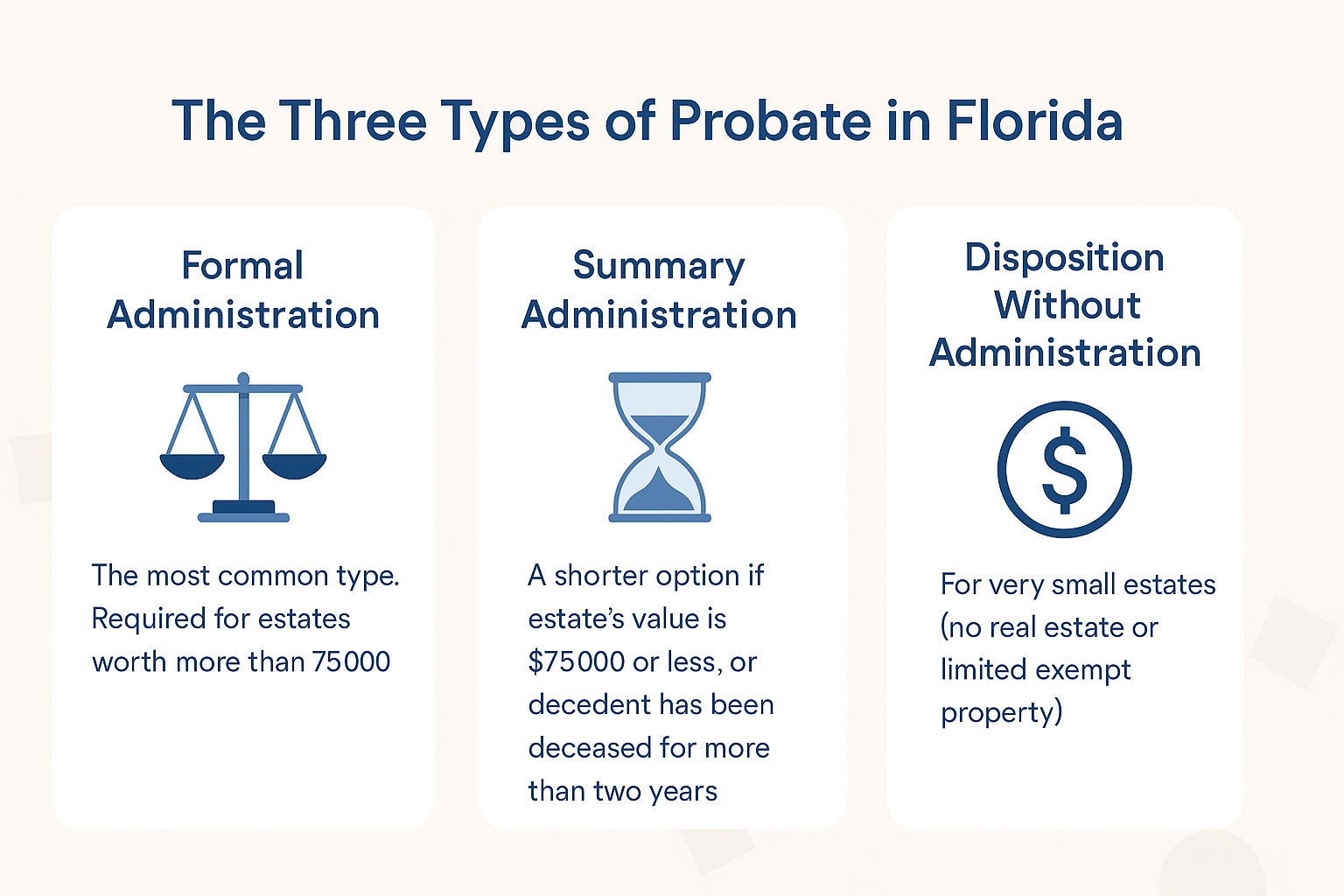
Not every estate requires the same process. Florida law offers three paths:
1. Formal Administration
The most common type. Required for estates worth more than $75,000 (not counting exempt property like homestead or personal property allowances). It’s court-supervised and involves appointing a personal representative (executor).
2. Summary Administration
A shorter option if:
- The estate’s value is $75,000 or less, or
- The person has been deceased for more than two years.
- Law: Fla. Stat. §§ 735.201–735.2063
3. Disposition Without Administration
For very small estates (no real estate, only certain exempt property or reimbursements of final expenses).
- Law: Fla. Stat. § 735.301

How Long Does Probate Take?
Every family asks this question. Here’s the reality:
- Summary Administration: Often finished in 3–6 months
- Formal Administration: Usually 6–12 months, but it can take longer if there are disputes, many assets, or complicated debts

What Does Probate Cost in Florida?
Costs depend on the estate, but here are some typical expenses:
- Court filing fees: $345–$405
- Notice to creditors publication: $200–$300
- Attorney’s fees: Florida law requires “reasonable compensation” (Fla. Stat. § 733.6171). Many attorneys base fees on the size of the estate.
Good news: These costs usually come out of the estate itself, not from family members’ pockets.
Florida Probate Protections for Families
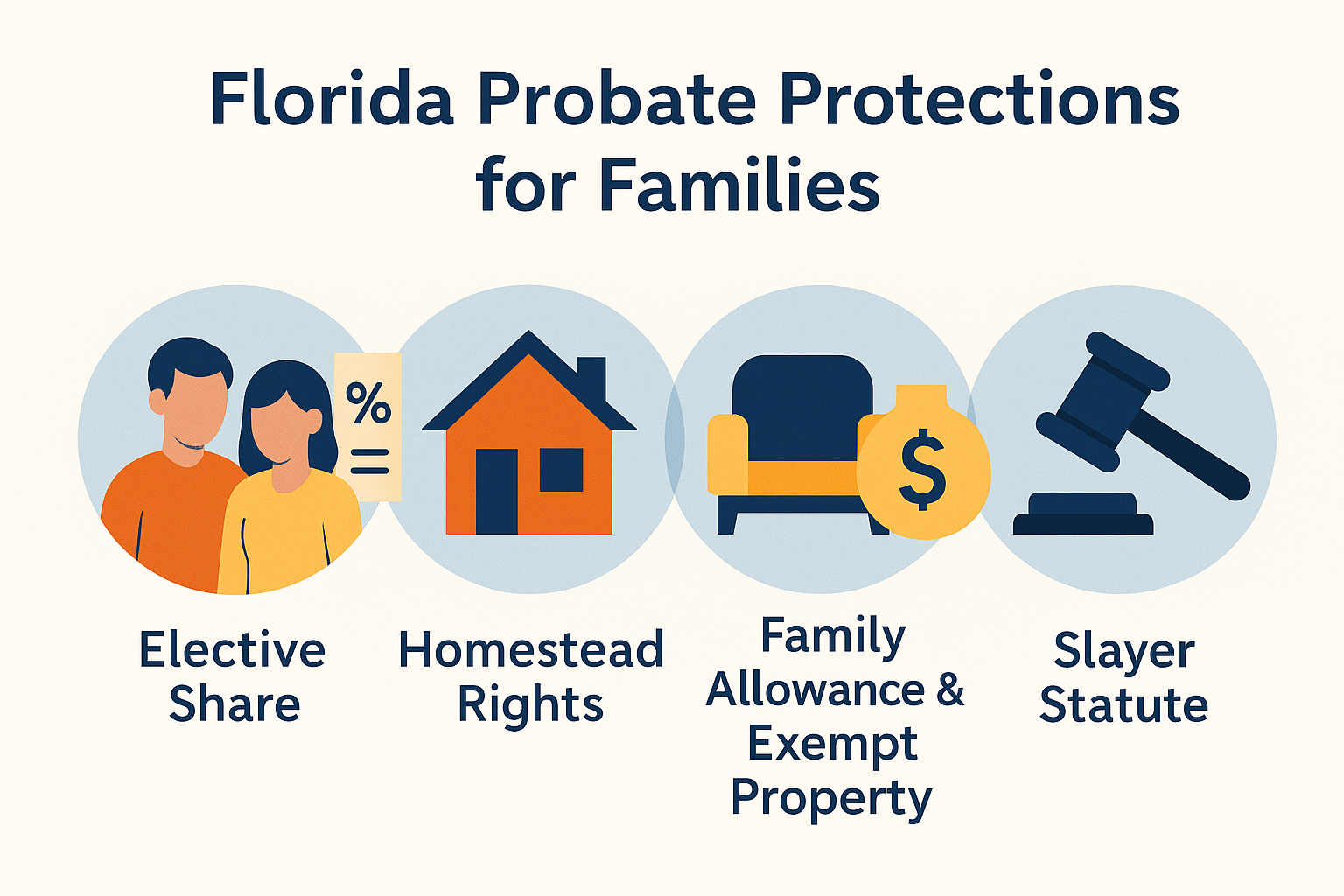
Florida law has built-in safeguards for spouses and children:
- Elective Share: A surviving spouse can claim 30% of the “elective estate”, which includes more than just probate assets (Fla. Stat. §§ 732.201–732.228).
- Homestead Rights: The family home is strongly protected. A surviving spouse often receives either a life estate or may elect a 50% ownership share (Fla. Const. art. X, § 4; Fla. Stat. § 732.401).
- Family Allowance & Exempt Property: Up to $18,000 as a family allowance, plus exempt property like furniture and household items worth up to $20,000 (Fla. Stat. §§ 732.402–732.403).
- Slayer Statute: Someone who intentionally caused the decedent’s death cannot inherit (Fla. Stat. § 732.802).
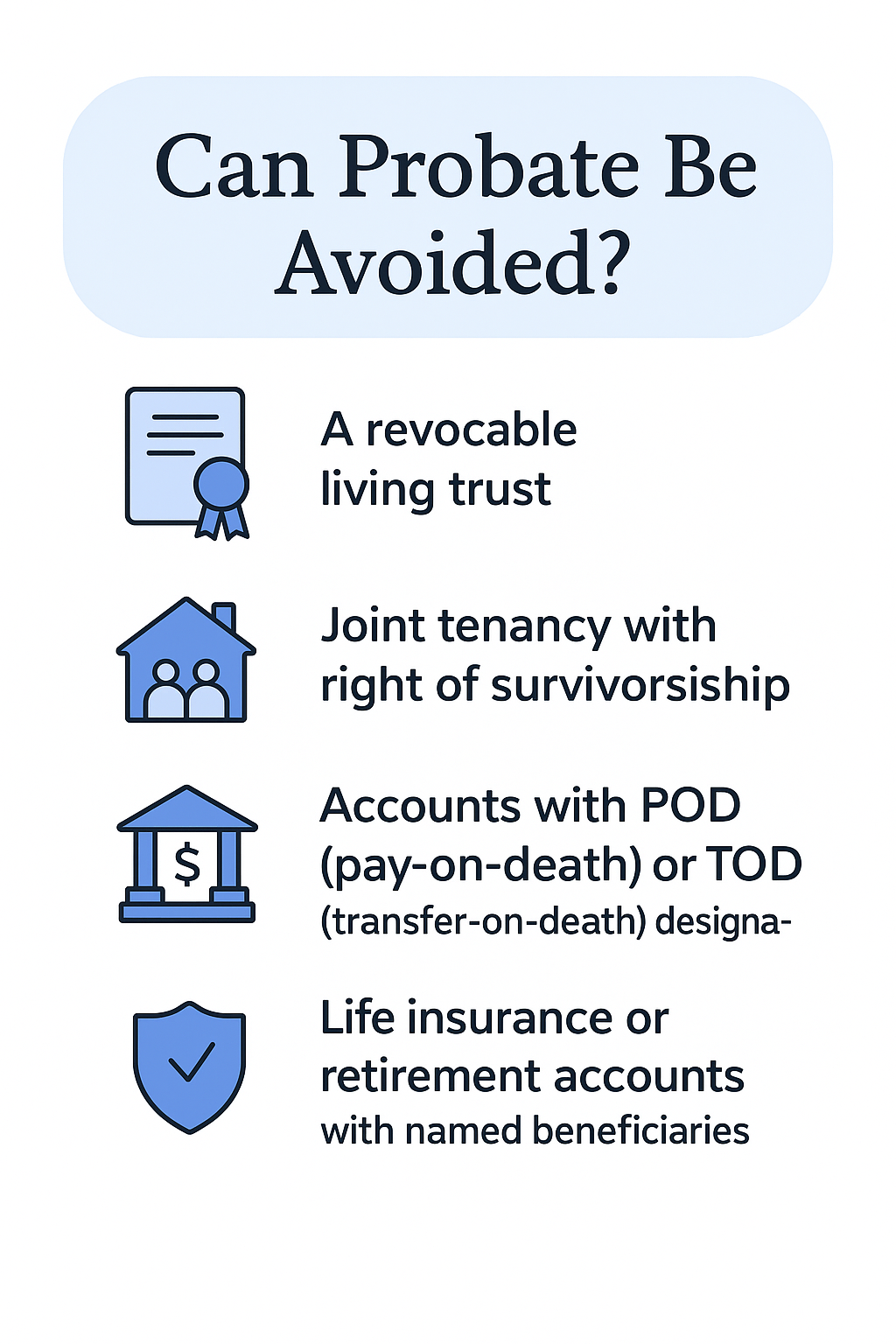
Can Probate Be Avoided?
Yes—sometimes. Assets don’t go through probate if they’re held in:
- A revocable living trust
- Joint tenancy with right of survivorship
- Accounts with POD (pay-on-death) or TOD (transfer-on-death) designations
- Life insurance or retirement accounts with named beneficiaries
Planning ahead can save your family significant time and expense.

Do You Really Need a Probate Attorney?
In Florida, most estates going through formal administration require a probate attorney (Fla. Prob. R. 5.030). Even in summary cases, an attorney can prevent costly mistakes.
A good probate lawyer can:
- Help you choose the right probate process
- Make sure deadlines are met
- Protect your rights if you’re a surviving spouse or heir
- Smoothly handle creditor claims and property transfers
Final Thoughts
Probate can sound intimidating, but with the right guidance it doesn’t have to be overwhelming. Florida law gives families options—from quick summary procedures to full formal probate—and provides protections for surviving spouses and children.
If you’re facing probate in Florida, don’t go it alone. An experienced probate attorney can walk you through the process, handle the paperwork, and give you peace of mind during a difficult time.
Ready to get answers?
If you’re facing probate in Florida, you don’t have to go through it alone. Fill out our FREE consultation request form today or call our office at 407-337-3377 to speak with our team. We’ll guide you through the process, protect your family’s rights, and give you peace of mind every step of the way.