

(And Why That Difference Can Save You Thousands)
Summary
Real estate agents play an important role in helping buyers and sellers navigate property transactions, but Florida law limits their ability to provide legal advice about contracts, title issues, and closing documents. Because real estate transactions involve complex legal provisions—from inspection contingencies and HOA restrictions to title exceptions and tax obligations—legal guidance can be critical to protecting a buyer’s or seller’s interests. Having a real estate attorney review documents before closing can help identify risks, clarify obligations, and prevent costly disputes after the transaction is complete.
When you buy or sell a home, your real estate agent becomes your best friend. They show you properties, guide you through inspections, and help you navigate the whirlwind of negotiations.
But when it comes to the fine print — the legal language buried in your contract, title, and closing documents — there’s a limit to what your agent can say.
Not because they don’t care, and not because they don’t know something might be off. It’s because Florida law prohibits real estate agents from giving legal advice.
And that one line in the sand can make or break your deal.
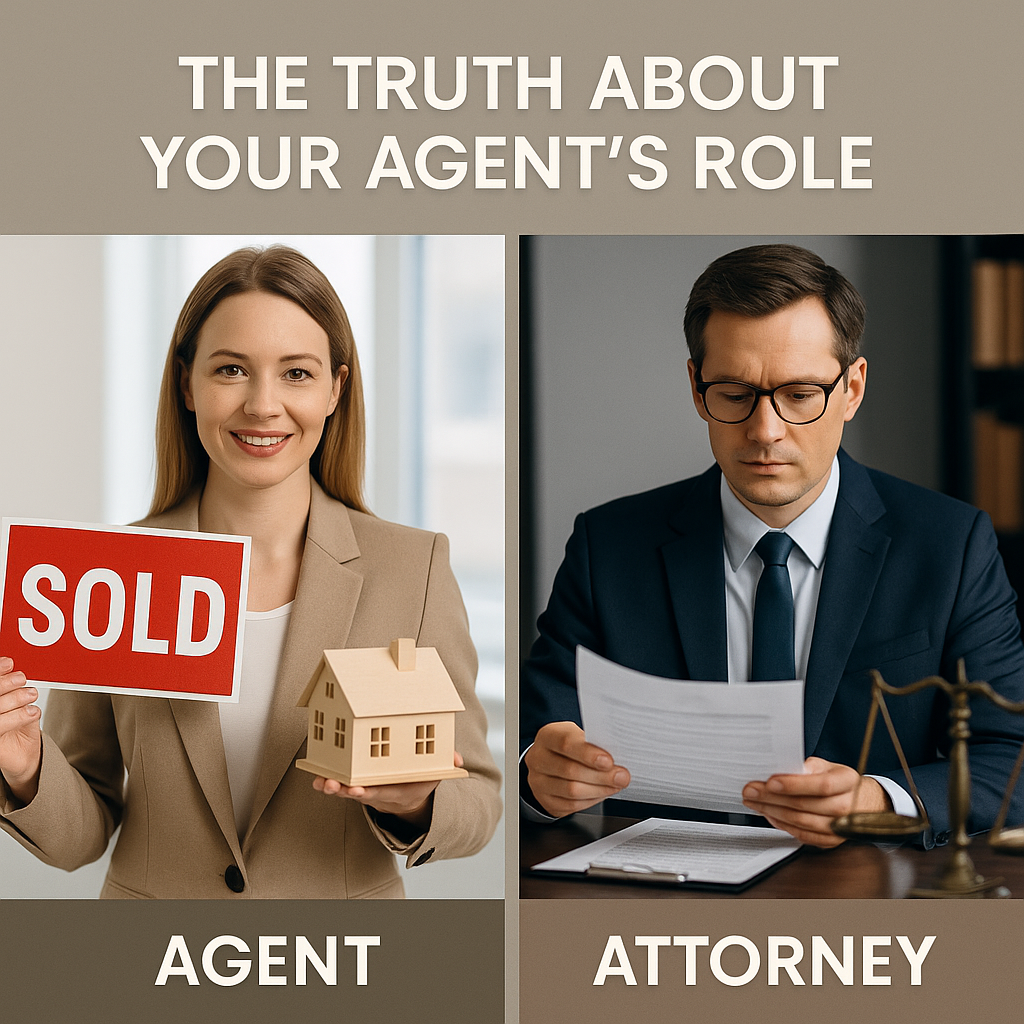
⚖️ The Truth About Your Agent’s Role
Your real estate agent is licensed to help you buy or sell a home — not to interpret legal documents.
They can fill in blanks on standard forms and explain general procedures, but they can’t legally interpret what those clauses mean for you.
That’s a big difference.
Because while agents focus on getting you to the closing table, attorneys focus on what happens after you sign.
In other words, your agent helps you get the house.
Your attorney makes sure you actually own it — safely and securely.
📜 The Fine Print You Didn’t Read (and They Can’t Explain)
Real estate contracts are written by attorneys for a reason — they’re filled with terms that protect someone, and it’s not always you.
Here are just a few areas where legal advice makes the difference between a clean deal and a costly mess:
- Inspection contingencies: Do you really understand when and how you can cancel — or get your deposit back?
- Title exceptions: That “little note” could mean a previous owner, lienholder, or HOA still has rights over your property.
- HOA documents: Restrictions, assessments, and maintenance obligations can drastically affect your ownership costs.
- “As is” clauses: They can limit your ability to ask for repairs — even for hidden defects discovered after closing.
- FIRPTA: Did you know? When you buy property from a foreign seller, you’re responsible for making sure their FIRPTA taxes get paid. If not, the IRS can come knocking on your door.
Your agent isn’t allowed to interpret these provisions.
But your attorney can review, explain, and negotiate them before they become a problem.

🧩 When Deals Go Wrong, Guess Who Gets the Call
I can’t count the number of times a client has come to me after closing — once the damage was done.
Like the buyer who discovered a hidden home equity loan the title company failed to discharge.
Or the seller blindsided by an HOA assessment that wasn’t disclosed at signing.
By the time an attorney gets involved, fixing these issues often costs more time, stress, and money than a quick review before closing ever would.
That’s why legal guidance isn’t an “extra” — it’s an insurance policy on your peace of mind.
💼 Why Attorneys Think Differently
Different Roles. Shared Goals.
Let’s be honest — agents and attorneys approach a transaction from different perspectives, but both want your deal to succeed.
Agents drive momentum. Attorneys provide protection.
A skilled real estate agent helps you find the right property and move efficiently toward closing.
An experienced real estate attorney ensures that every step of that journey is legally sound and built to protect your interests long after closing day.
We’re not here to replace your agent — we’re here to reinforce your confidence in every document you sign.
Our role is to anticipate the risks, resolve issues before they become problems, and make sure your dream home rests on a solid legal foundation.
Because when your deal is structured right, it’s not just a closing — it’s the start of secure ownership.

🏡 The Smartest Move You Can Make
Before you sign your next contract, ask yourself:
Has a real estate attorney reviewed this?
If not, it’s time to change that.
At the Law Offices of Denise L. Adkins, P.A., we combine legal expertise with real-world real estate experience to help Florida buyers, sellers, and investors protect what matters most.
Because when it comes to real estate, what your agent can’t tell you might be exactly what you need to hear.
✅ Next Step: Protect Your Next Deal
👉 Click here to learn more about our title and closing services
👉 Click here to learn more about our other real estate legal services
Or schedule a consultation today to review your upcoming transaction before it’s too late.