Summary
Selling inherited property in Florida can involve complex legal and title issues, particularly when probate, multiple heirs, or homestead protections are involved. Whether heirs can sell a property without probate depends on how the property was titled, whether estate planning tools such as trusts or enhanced life estate deeds were used, and who has legal authority to convey title. Understanding Florida probate rules, title requirements, and potential disputes among heirs is essential before attempting to sell inherited real estate.
When a Florida property owner passes away, heirs are often left with questions about what happens next—especially whether the property can be sold and whether probate is required. One of the most common questions is: can heirs sell inherited property in Florida without probate?
The answer depends on several factors, including how the property was titled, whether any estate planning tools were used, and whether legal authority exists to convey title. Florida law governing inherited real estate involves probate statutes, title requirements, and, in some cases, homestead protections.
This article discusses general principles of Florida law only and is intended for informational purposes. It does not provide legal advice and does not address any specific individual’s situation.
Selling Inherited Property in Florida: General Considerations
In Florida, ownership of real estate does not automatically transfer upon death unless certain legal mechanisms are in place. While heirs may have an interest in inherited property, legal authority to sell the property is a separate issue.
Whether a sale can occur—and when—often depends on:
- How title was held prior to death
- Whether probate avoidance planning was used
- Whether the property is subject to Florida homestead rules
- Whether there are multiple heirs
- Whether the title is clear and marketable
Because buyers and title insurers require clear authority and marketable title, these questions must be resolved before a closing can proceed.
Does Inherited Property Have to Go Through Probate in Florida?
Many, but not all, inherited properties in Florida require probate.
Probate is commonly required when:
- The deceased owned the property in their individual name only
- No trust, survivorship deed, or enhanced deed was in place
- There is no surviving joint owner
- Authority to transfer title cannot otherwise be established
Probate is the court-supervised process that authorizes a personal representative to act on behalf of the estate, including the sale of real property when permitted.
Some estate planning tools may allow property to pass outside of probate, but whether probate is required must be evaluated based on the specific facts and documentation involved.
When Can Inherited Property Be Sold Without Probate?
In limited circumstances, inherited property in Florida may be sold without a formal probate administration. Situations that may allow this include:
- Property held in a properly funded revocable living trust
- Property transferred by an Enhanced Life Estate Deed (often called a Lady Bird Deed)
- Property owned as joint tenants with right of survivorship
- Certain small estate procedures, depending on circumstances
Even when probate is avoided, additional documentation is often required to establish authority and satisfy title insurance requirements.

Who Has Authority to Sell Inherited Property in Florida?
Authority to sell inherited property depends on how the property passes after death.
Depending on the circumstances, authority may rest with:
- A court-appointed personal representative
- A trustee, if the property is held in trust
- A surviving joint owner
- All heirs acting together, if legally permitted
Being an heir alone does not automatically grant the right to sell property. Buyers and title insurers typically require clear proof of authority before proceeding.
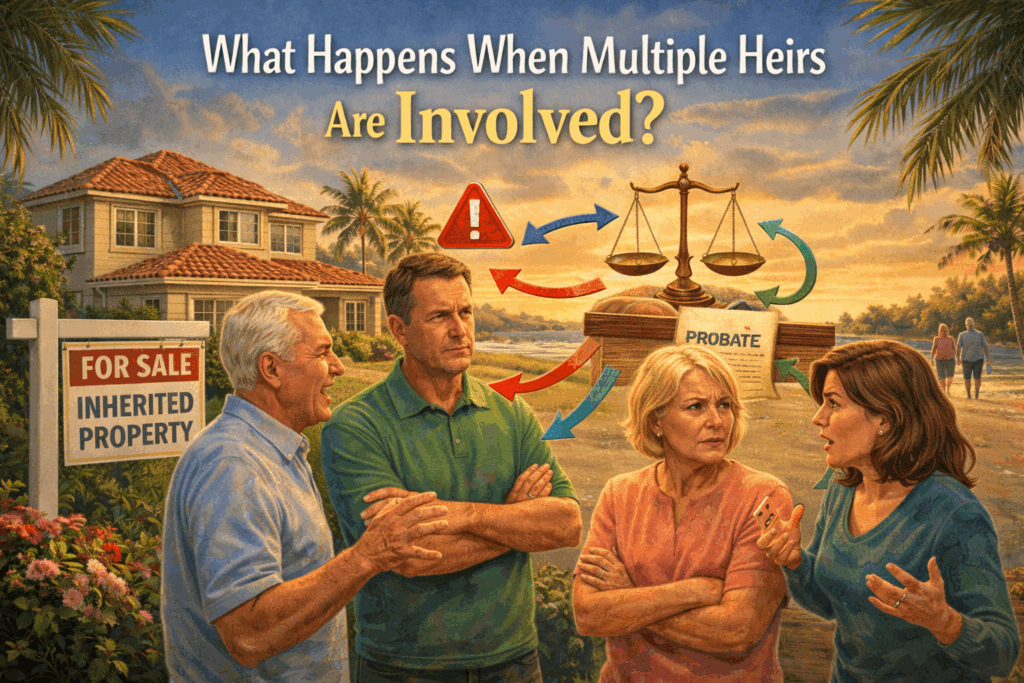
What Happens When Multiple Heirs Are Involved?
Inherited property frequently involves more than one heir. In those cases, agreement among all parties is often necessary for a sale to proceed.
Common issues include:
- Disagreements about whether or when to sell
- Disputes over value or proceeds
- One heir occupying the property
- Claims related to expenses or contributions
When disputes arise, the sale of the property may be delayed until the issues are resolved through appropriate legal processes.
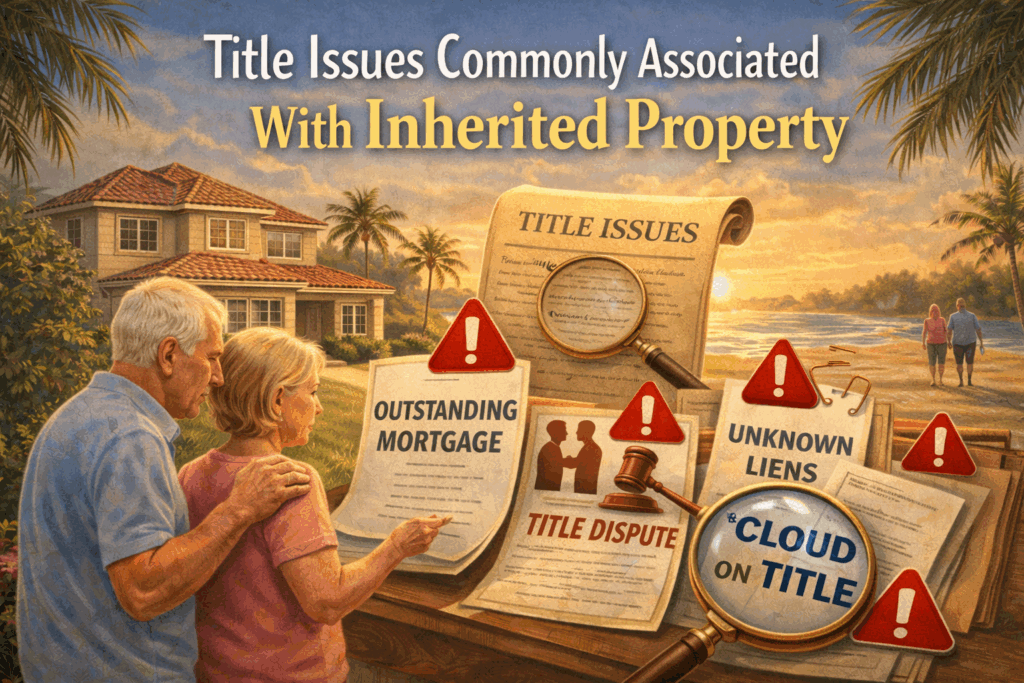
Title Issues Commonly Associated With Inherited Property
Inherited property transactions often involve title-related complications that must be addressed before closing, such as:
- Lack of probate authority
- Incomplete or improperly recorded deeds
- Outstanding mortgages or liens
- Unclear chain of title
- Unknown or missing heirs
Even when heirs believe a sale is permissible, unresolved title issues can prevent a transaction from closing.
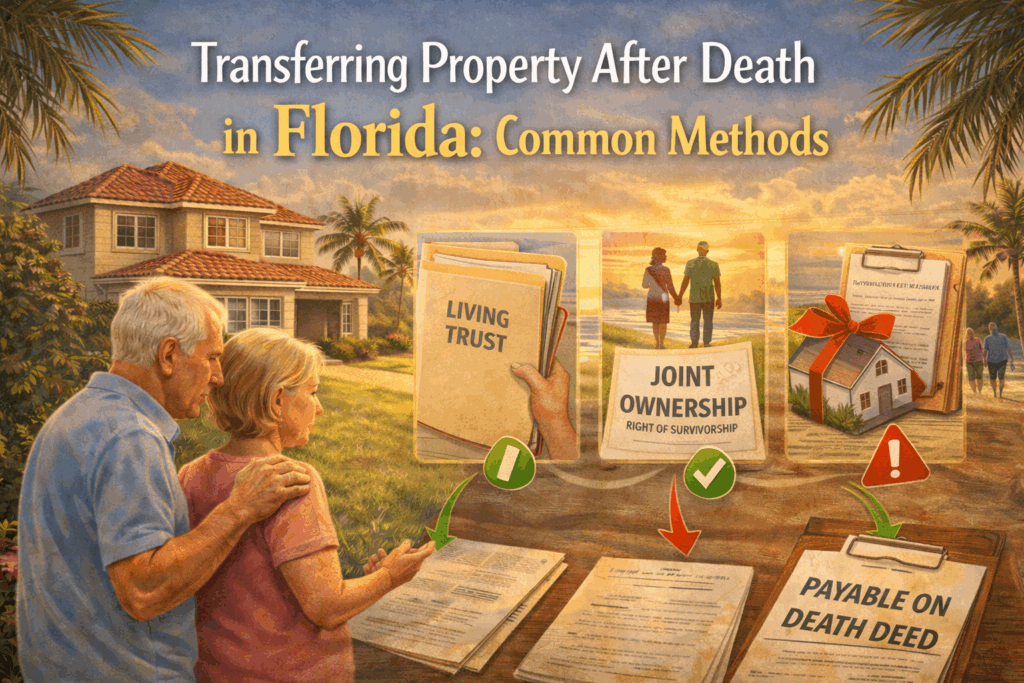
Transferring Property After Death in Florida: Common Methods
Florida law recognizes several mechanisms that may affect how property transfers after death:
Trusts
Property held in a properly administered trust may avoid probate, but trustees must still comply with trust terms and title requirements.
Enhanced Life Estate (Lady Bird) Deeds
When properly drafted and recorded, these deeds may allow property to transfer outside probate. Errors in drafting or recording, however, can create title problems.
Quitclaim Deeds
Quitclaim deeds do not resolve title defects and may not be sufficient for inherited property transactions, particularly where probate or authority issues exist.
Each method has limitations and risks depending on how it is used.
Why Florida Real Estate and Title Law Matter
Selling inherited property in Florida involves more than a typical real estate transaction. Issues of estate administration, title law, and statutory compliance frequently overlap.
Without proper authority and clear title, sales may be delayed, canceled, or challenged after closing. Understanding the legal framework before listing or contracting can help avoid unexpected complications.
Request a Free Consultation
Inherited property sales involve legal and title considerations that should be addressed before a contract is signed. A brief consultation can help you understand your authority, timing, and options—without obligation.