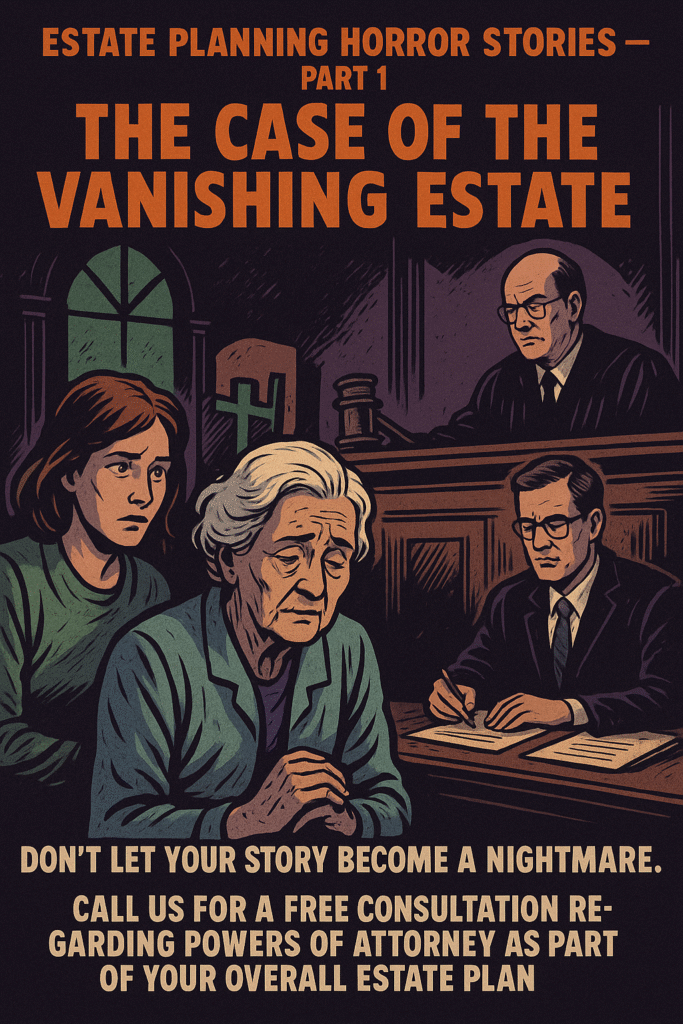

🎃 Estate Planning Horror Stories – Part 1 (Inspired by a true case. Certain names and details have been omitted to protect the privacy of those involved.)
Gather ‘round, dear readers… it’s the season of shadows, and tonight’s tale is not from a haunted house but from the courthouse.
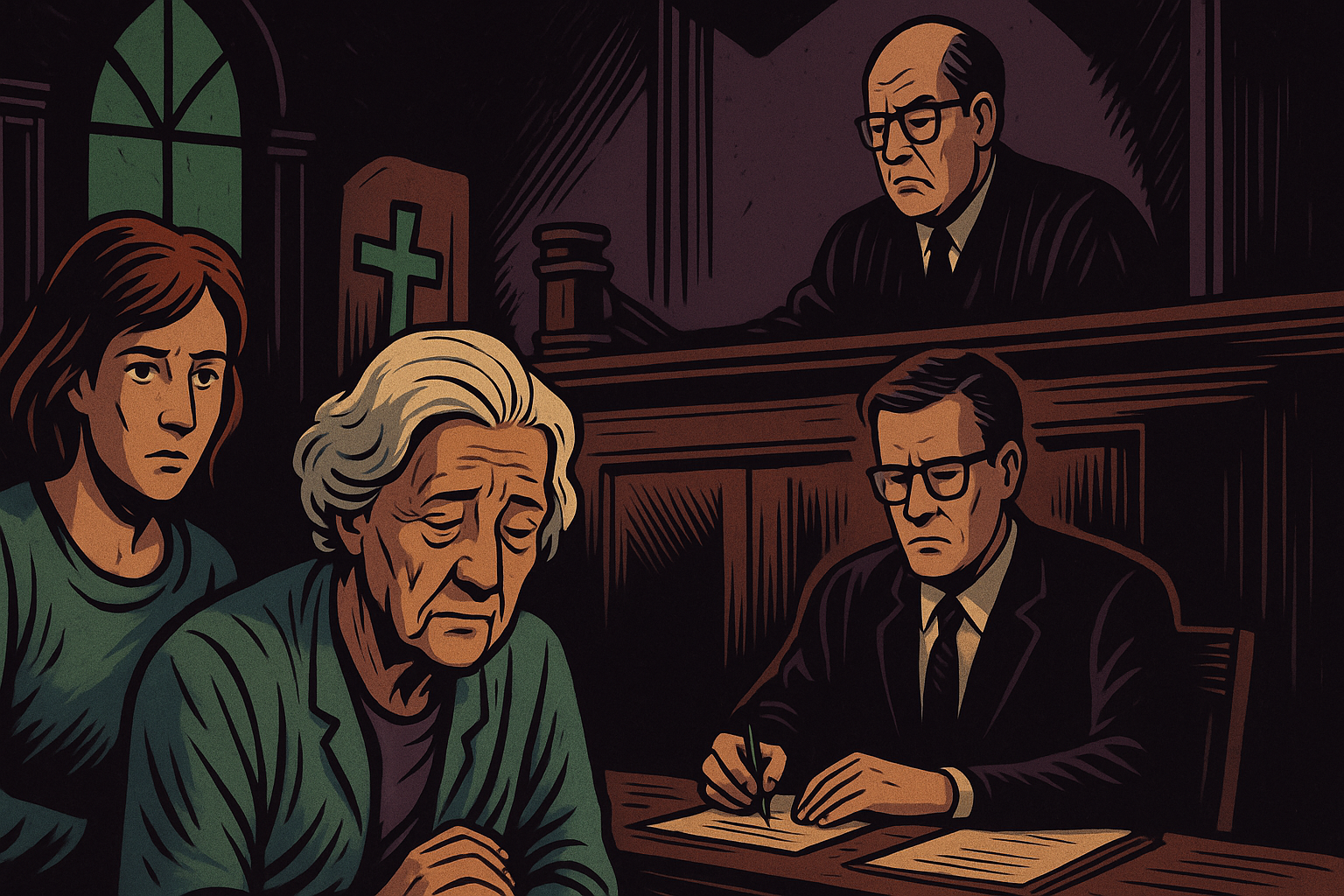
Our story begins with a sweet, elderly woman who spent her life working hard and saving wisely. She built an estate worth over $1 million—a legacy she hoped would someday pass on to those she loved.
But there was one terrifying oversight…
She never signed a proper Power of Attorney.
Now, because she has lost capacity, her life and her finances are under the total control of the guardianship court. Every decision—what bills are paid, what care she receives, even what happens to her home—must be approved by strangers.
And the costs? A nightmare.
In just the last year alone, $50,000–$75,000 in legal fees and guardianship expenses have been drained from her estate. Money that should have gone to her care is instead being swallowed by procedure.
It gets worse.
Her home had been paid off for years—a safe haven and symbol of her independence. But the guardian, with the court’s oversight, forced her into a reverse mortgage just to cover the ever-growing legal bills. She didn’t get a say in the matter. Her stepsister of nearly 50 years—her only family, confidante, and caregiver—was legally powerless.
Adding fuel to the fire, her old neighbors—motivated by greed—were the ones who first filed for guardianship, hoping to pressure her into changing her will. What followed was a mess of court filings, hearings, and fees, leaving the woman’s dignity and estate hanging in the balance.
All because of one missing document.
Why Powers of Attorney Matter
A Power of Attorney (POA) gives someone you trust the authority to step into your shoes if you can’t make decisions for yourself. Without it, the court may step in through guardianship—a process that is expensive, invasive, and often leaves loved ones powerless.
Key Variables in Drafting a Power of Attorney
When preparing a POA, details matter. Here are just a few of the variables lawyers consider:
- Scope of Authority: Will it be limited to finances, or broad enough to include health, real estate, and business matters?
- Durability: Does it remain effective if you lose capacity (it should)?
- Successor Agents: Who steps in if your first choice can’t serve?
- Gifting Powers: Should your agent have authority to make gifts, transfer assets, or engage in Medicaid planning?
- Real Estate Transactions: Will the POA be sufficient for buying, selling, mortgaging, or protecting real property?
- Bank Acceptance: Some institutions reject vague or improperly drafted POAs—specific statutory language is key.
- Execution Requirements: Florida requires witnesses and notarization. A missed formality can make the document worthless.
This is not a fully exhaustive list but meant it’s meant to review high level variables to help you better understand the true complexity of this seemingly simple document.
The Pitfalls of DIY Estate Planning
Yes, you can draft your own Power of Attorney with an online template—and many people try, because they want to be proactive and save money. The problem is, with estate planning, you don’t know what you don’t know.
That’s where the horror stories begin.
- Generic Forms: Many online templates don’t meet Florida’s strict statutory requirements.
- Missing Powers: Without explicit language, banks, title companies, and Medicaid planners may reject the document.
- Ambiguity: Courts interpret vague documents narrowly, stripping your agent of authority.
- Execution Errors: A missing witness or improper notarization can make your POA worthless.
- No Legal Guidance: Templates can’t anticipate tax issues, family dynamics, or state-specific rules.
What looks like a few hundred dollars in savings can quickly snowball into a six-figure guardianship nightmare.

This Halloween season, let this tale be your warning: the scariest monster in estate planning isn’t a ghost or goblin—it’s procrastination.
Don’t wait until it’s too late. A properly executed Power of Attorney is one of the simplest, most effective ways to protect yourself and your loved ones. Done correctly, it keeps control in your family’s hands—not the court’s.
👻 Stay tuned for Part 2 of our Estate Planning Horror Stories…
🕯️ Don’t let procrastination haunt your estate plan.
A properly drafted Power of Attorney can save your family from costly court battles and endless headaches. Take the first step toward peace of mind—schedule your free consultation today.